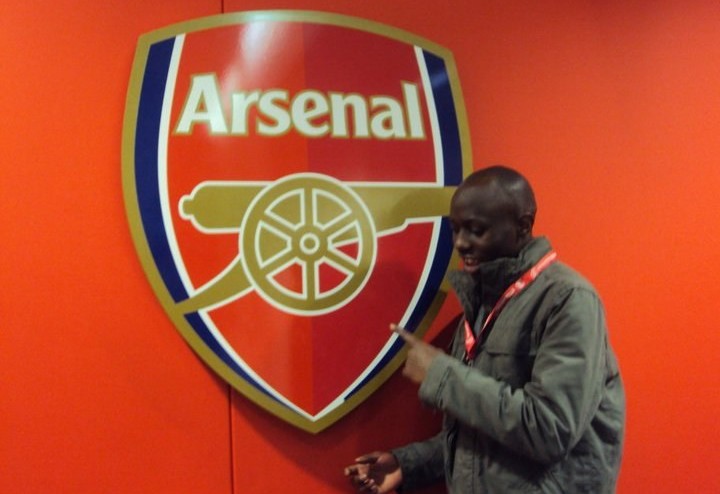
What strikes me about moments like an Arsenal F.C. title win is that the celebrations in places like Nairobi, Lagos, Accra or Kampala often feel as emotionally charged as those in North London itself. Streets fill up, people wear jerseys to work, clubs and pubs overflow, WhatsApp statuses become coordinated narratives of joy, rivalry and belonging. Last night, Nairobi erupted as Manchester City drew against Bournemouth, conceding the title to the mighty Arsenal (you know which team I support now). To an outsider, it can appear irrational. But culturally and sociologically, I think it reveals something much deeper about Africa’s relationship with modernity, identity and participation in the global order.
I often return to something David Goldblatt once said: football is perhaps the world’s largest cultural manifestation. That observation is important because football is not simply entertainment. It is one of the few truly global cultural systems in which geography, class, race, language, and politics momentarily collapse into a shared emotional experience. In many ways, supporting European clubs has become a form of global citizenship. It allows millions of Africans to feel connected to a wider world that has historically excluded them economically, politically and institutionally.
For many young Africans, the first consistent exposure to “global culture” did not come through diplomacy or academia. It came through the English Premier League. Weekly broadcasts created routines, identities and emotional communities that transcended borders. A young man in Kisumu could discuss tactics with someone in London or Mumbai with equal passion and competence. Supporting Arsenal, Manchester United, or Barcelona became not just about football, but about participating in a modern global conversation.
I also think there is an aspirational dimension to all this. European football projects images of organisation, excellence, infrastructure, prestige and economic power. Fanhood therefore becomes symbolic proximity to systems perceived as functioning better than local realities. Part of it is escapism, yes, but part of it is also a search for belonging within global narratives of success and relevance.
At the same time, I believe this phenomenon exposes an uncomfortable contradiction. Africa contributes enormously to the emotional energy, talent pipeline, broadcast audiences and commercial growth of global football, yet captures relatively little of the economic value. We celebrate the trophies, consume the content, export the players, but the industrial ecosystems, media rights wealth, merchandising structures and institutional power remain concentrated elsewhere.
This is why I continue to argue that the conversation about African football must move beyond fandom alone. The issue is not whether Africans should support European clubs. Global fandom is now part of modern cultural reality. The real issue is whether Africa can transform from being primarily a consumer market into an active producer and owner within football’s global value chain.
In many ways, those Arsenal celebrations are also evidence of football’s power as infrastructure. They show that emotional networks, social cohesion, consumer behaviour, identity formation and cultural mobilisation already exist at massive scale across Africa. The strategic question, in my view, is how African institutions, businesses and policymakers convert that passion into sustainable local ecosystems, industries and opportunities.
Because ultimately, the celebration is not just about Arsenal winning a league title after more than two decades. It is also about millions of people across Africa feeling, even momentarily, connected to something global, meaningful and bigger than themselves.