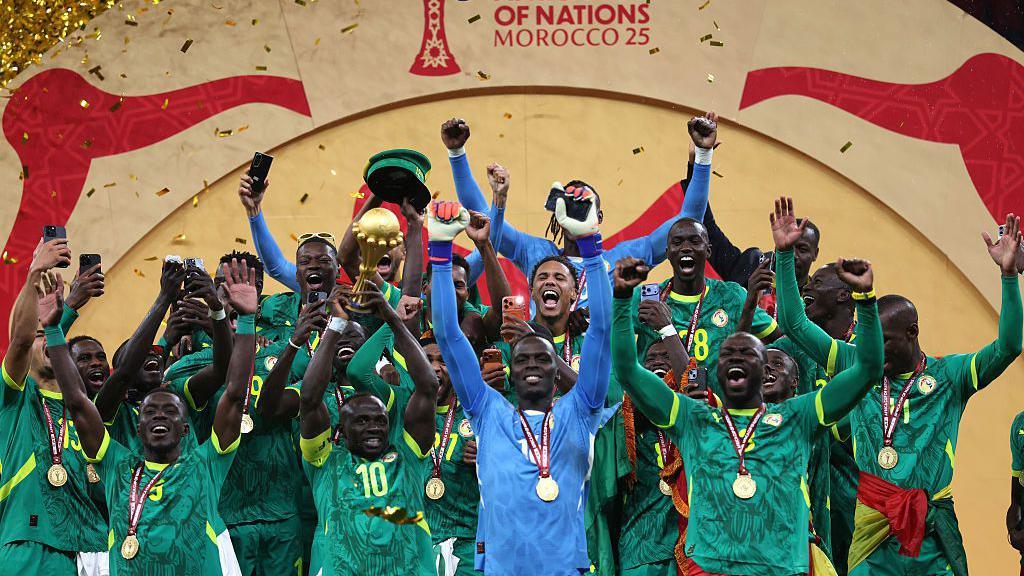
The decision by the Confederation of African Football (CAF) to strip Senegal of the AFCON 2025 title and award it to Morocco — two months after Senegal won the final 1-0 in extra time — is without precedent in the history of the tournament, and arguably at the highest levels of international football. The CAF Appeal Board, citing Articles 82 and 84 of the AFCON regulations, ruled on 17 March 2026 that Senegal had forfeited the match by leaving the pitch in protest during stoppage time of the final in Rabat. The result was officially recorded as a 3-0 win for Morocco.
Regardless of the legal reasoning behind the ruling, the implications extend far beyond Senegal, Morocco, or a single tournament. This moment forces African football to confront an uncomfortable but necessary question: what happens when the authority of institutions overtakes the finality of results on the pitch?
Football, more than most sports, is built on a simple social contract. Ninety minutes — sometimes 120 — determine the outcome. The final whistle blows, and the result becomes part of history. Appeals may follow, sanctions may be imposed, but the ultimate sporting outcome is rarely reversed long after the event.
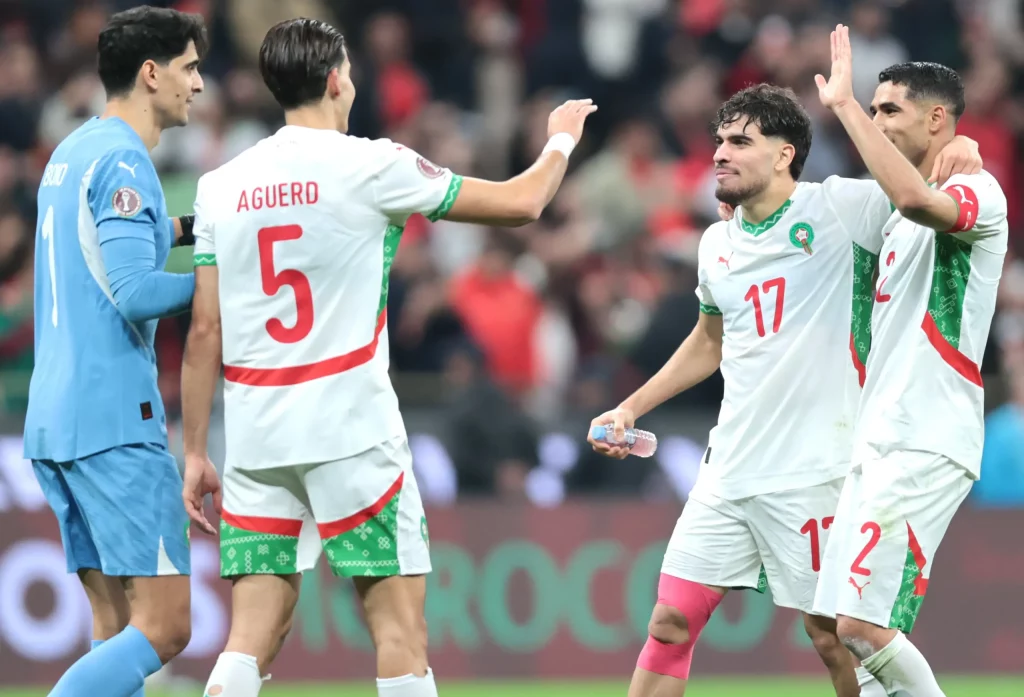
The facts of the final make this ruling even harder to absorb. In stoppage time, with the score level, Morocco was awarded a penalty following a VAR review, a decision that led coach Pape Thiaw to walk his players off the pitch in protest, triggering a 14-minute delay. Sadio Mané was among those urging teammates to return. They did. Brahim Diaz missed the penalty. Senegal went on to win 1-0 in extra time, with Pape Gueye scoring, and were crowned continental champions. Morocco appealed. Two months later, the Appeal Board set aside the initial CAF Disciplinary Board ruling — itself a telling detail, revealing that even CAF’s own first-instance process failed to reach the conclusion the regulations apparently demanded — and declared Senegal the forfeit loser. CAF’s decision has now crossed a threshold few thought possible.
The issue is not the verdict — it is the precedent
It is important to resist the temptation to reduce this moment to a debate about who deserved the trophy. Senegal’s supporters will feel aggrieved. Morocco’s supporters will see justice served. But focusing on fans’ emotional reactions misses the deeper institutional significance.
The real issue is precedent.
When a continental championship result is overturned months later, it signals that football matches are no longer decided solely on the pitch. They become provisional outcomes subject to administrative review and post-event reinterpretation. That shift fundamentally changes how the game is perceived.
Football’s legitimacy rests on three pillars: fairness, clarity, and finality. Once any of these pillars weakens, trust begins to erode.
Perception is as powerful as procedure
Even if CAF’s decision is grounded in statutes, disciplinary codes, or legal advice, governance in sport is not judged only by procedural correctness. It is judged by perception. And the procedural record here is not clean. The CAF Disciplinary Board, the first body to rule on Morocco’s appeal, did not apply Articles 82 and 84. The Appeal Board set that decision aside entirely. This means CAF’s own internal processes produced two contradictory conclusions from the same facts. That internal inconsistency is not a minor administrative detail; it is the kind of institutional fragility that turns a disputed ruling into a governance crisis.
In this case, the optics are difficult to ignore. The host nation, itself fined $100,000 for interference around the VAR review area, with further penalties for laser incidents and the conduct of ball boys during the final, ultimately receives the title through a ruling rather than a result. The Senegalese government has gone further than its federation, publicly calling for an independent international investigation into suspected corruption within CAF’s governing bodies. The federation itself described the ruling as a “travesty” with “no legal foundation” and has announced an emergency appeal to the Court of Arbitration for Sport in Lausanne. The trophy moves not through another match, but through a boardroom.
For many observers across the continent and around the world, this will raise uncomfortable questions about neutrality, transparency, and institutional independence. Whether those perceptions are fair or not is almost secondary. In football governance, perception often becomes reality.
Once trust is questioned, institutions face a long and difficult road to rebuild it.
This moment also highlights the increasingly complex relationship between host nations, sports diplomacy, and continental governance. In recent years, several countries have invested heavily in football infrastructure, tournament hosting, and strategic engagement with CAF as part of broader national soft-power strategies. Morocco is perhaps the clearest example: its government has publicly stated that AFCON hosting revenues of over €1.5 billion are to be channelled into infrastructure required for the 2030 FIFA World Cup, which it will co-host with Spain and Portugal. When a host nation’s World Cup preparation is financially entangled with an AFCON that it has just been awarded by administrative ruling, “institutional distance” becomes less a procedural courtesy and more an existential governance requirement. Yet it is precisely that distance which the sequence of events here has made so difficult to assert.
This dynamic is not limited to the men’s game. Shifts in the hosting of women’s competitions, including decisions that have moved at short notice between a small pool of willing nations, reveal just how dependent continental football remains on a handful of capable host countries. That concentration, however practical, amplifies the governance risk: when the same nations that anchor the tournament ecosystem are also the ones most directly affected by major rulings, the appearance of institutional distance becomes harder to sustain.
Two Models of Hosting
The structural fragility of this host-nation dependency is already evident in what follows. Kenya, Uganda, and Tanzania were awarded the 2027 AFCON under the “East Africa Pamoja” banner, the first time three nations would co-host the tournament, and a moment of genuine pride for a region without a major football hosting tradition. Yet as of this week, Kenya has not paid its $30 million hosting fee. Uganda and Tanzania have paid. The precise nature of Kenya’s position deserves clarity: the $30 million has been budgeted in FY 2026/27, a budget that will only be read in June 2026, on the reasonable basis that the bulk of tournament operational expenditure falls in the lead-up to the event. What Kenya did not anticipate — because CAF did not communicate it until two weeks ago — was that the fee would be called in by 30 March 2026, four months before that budget cycle begins. The request before parliament was therefore not for new money, but for a supplementary allocation in the current financial year, FY 2025/26, to meet a deadline that arrived without adequate notice. Sports Principal Secretary Elijah Mwangi appeared before the National Assembly’s Departmental Committee on Sports and Culture on 19 March 2026 to make exactly that request. Without it, he warned, “the gains that we have made in preparations of AFCON may be in jeopardy.”
This matters for how the failure is characterised. If the payment deadline was only communicated in March 2026 for a bid awarded in 2022, the primary institutional failure is not Kenya’s budget planning. It is CAF’s. A hosting agreement awarded four years in advance should include a structured payment schedule agreed at the point of award, not a deadline issued with thirty days’ notice. That CAF’s hosting contracts apparently do not contain this is precisely the kind of governance gap the events surrounding AFCON 2025 have already exposed. The crisis in Kenya is real. But its origins point back to the same institution whose disciplinary processes are currently before the Court of Arbitration for Sport.
The infrastructure picture makes the financial argument almost secondary. A CAF inspection report based on assessments conducted in February 2026 confirms that none of Kenya’s three proposed stadiums fully meet Category 4 requirements for hosting AFCON 2027. Talanta, the new-build facility in Nairobi, is the flagship venue and Kenya’s best prospect for compliance, but it remains far from complete, with deadlines already pushed from March to July. Kasarani requires extensive upgrades across pitch, lighting, security, and media infrastructure. Nyayo has effectively been downgraded: CAF has recommended that it be used primarily as a training venue, citing ageing infrastructure and the absence of a clear renovation plan. The same report finds that none of Uganda’s four proposed stadiums meets Category 4 requirements either. CAF’s own assessment is unambiguous: “the delivery programme remains exposed due to the scale of structural upgrades required, dependency on new construction, and uneven readiness of training infrastructure.” The LOC chairman, Nicholas Musonye, sought to reassure stakeholders: “Our government is committed and will honour the obligation.” The deadline is 30 March. The stadiums tell a different story.

The contrast with Morocco is instructive, and goes deeper than money. Morocco’s investment in AFCON hosting is embedded within a long-term national sports diplomacy strategy. Hosting the 2025 tournament wasn’t a standalone decision; it’s part of a deliberate plan that includes co-hosting the 2030 FIFA World Cup, sustained investment in football infrastructure, and long-term engagement with CAF’s commercial and governance structures. The returns — financial, reputational, and geopolitical — were calculated in advance and have largely materialised. That is what strategic hosting looks like. Kenya’s AFCON 2027 bid, by contrast, lacks a visible national (or regional) strategic framework to which the hosting is connected. There is no equivalent long-term vision that articulates what the tournament is meant to deliver for the country in terms of infrastructure, football development, tourism, or regional soft power. Without that framework, hosting commitments become vulnerable to the same pressures that have produced the current budget crisis: competing government priorities, short electoral cycles, and an absence of the institutional memory that turns a one-off event into a platform for lasting gain. The gap between these two models is not merely financial. It reflects the uneven institutional foundations on which continental football continues to build.
The contrast extends beyond the continent. This week, Brazil’s Federal Court of Accounts (the Tribunal de Contas da União) ruled that the federal government must submit a National Legacy Plan for the 2027 FIFA Women’s World Cup by September 2026. Not a promise. Not a ministerial statement. A legal mandate, issued by an independent accountability body, requiring the government to answer in advance what hosting is for. That such a mechanism exists in Brazil — and that it is being used — is itself a marker of institutional maturity. The accountability architecture catches the gap before it becomes a crisis. No equivalent mechanism exists in Kenya’s preparations for AFCON 2027. The question of what the tournament delivers for East Africa has not been formally asked, let alone answered. The $30 million fee crisis is not the disease. It is a symptom of a system that was never designed to ask the harder question.
The pattern is visible in real time. Even as Kenya’s AFCON 2027 hosting fee remains unpaid, the Football Kenya Federation announced this week that Kenya will host the inaugural FIFA Series Women tournament from 11 to 15 April at Nyayo Stadium, which CAF recently downgraded. Four nations, four continents, a FIFA mandate: Kenya said yes. FKF President Hussein Mohamed described it as a moment that “highlights Kenya’s capabilities to host world-class international competitions.” That may be true. But the capability to accept an invitation is not the same as a strategy for converting it into lasting gain. There is no articulated vision connecting the FIFA Series to the development of women’s football in Kenya — no pathway from the tournament to the league, no framework linking prestige hosting to domestic investment. That absence was made plain the same weekend the announcement circulated: Kenya Women’s Premier League clubs boycotted a round of fixtures due to a lack of funding. The women who would benefit most from football’s growing visibility in Kenya cannot afford to play. The women’s game is being used as a stage while its foundations are left to decay. That is not a hosting strategy. It is a pattern.
The broader governance challenge
This episode also highlights a deeper structural challenge within African football governance.
Across the continent, football institutions are frequently caught between competing pressures: political influence, commercial interests, international regulatory frameworks, and domestic expectations. In such environments, decision-making often becomes reactive rather than strategic.
Instead of robust systems capable of absorbing controversy, disputes quickly escalate into disciplinary battles, legal interventions, or administrative rulings.
We have seen similar patterns before:
- governance disputes escalating to international arbitration,
- internal conflicts spilling into public crises,
- development funds diverted into legal processes rather than institutional capacity.
The AFCON 2025 decision now adds another layer to that pattern. The regulation invoked — Article 82, which deems a team the loser if it leaves the pitch without the referee’s authorisation — exists for legitimate reasons. But its application here raises a harder question: if the rule is clear, why did CAF’s own Disciplinary Board not apply it at first instance? The fact that the Appeal Board had to set aside the lower ruling suggests the problem is not simply that the regulations are unclear, but that the institutions applying them are inconsistent.
It illustrates how the absence of resilient institutional mechanisms can turn a sporting controversy into a governance earthquake.
When events overshadow institutions
The commercial story of AFCON 2025 is, by any measure, extraordinary. CAF’s revenues from the Morocco tournament exceeded those of Cote d’Ivoire 2023 by over 90%, with total projected revenues of $192.6 million and net profits of $113.8 million, up from $72 million two years earlier. The sponsor base grew from nine partners at Cameroon 2021 to 23 at Morocco 2025, now spanning partners from the United States, China, Japan, Germany, Turkey, and, for the first time, the European Union itself. CAF secured 20 broadcast deals across more than 30 European territories, including free-to-air coverage in the United Kingdom for all 52 matches. African football has, in commercial terms, never looked stronger.
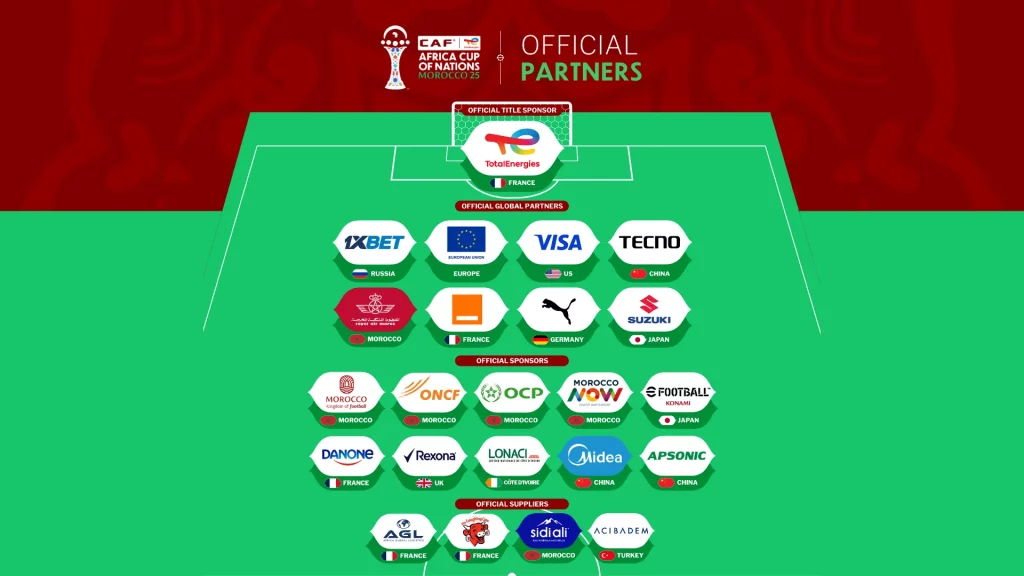
These developments are important and should be acknowledged. AFCON is no longer simply a continental competition; it is a genuinely global commercial platform, and that matters for the game’s long-term health across the continent.
Yet the AFCON 2025 ruling forces an uncomfortable question: what happens to that commercial value when governance fails? Sponsors signed on to be associated with Africa’s premier football showcase, not with a months-long disciplinary dispute whose outcome rewrites the scoreboard. Broadcast partners paid for the right to show competitive football, not administrative reversals. The 23 commercial partners who invested in AFCON 2025 now find their association tied to a tournament whose official result contradicts what every fan watched in the stadium and at home. That is not an abstract governance concern — it is a commercial liability.
A tournament can generate $192 million in revenue and still expose institutional fragility. Sponsorship can grow from $54 million to $126 million over four years, even as trust in the governing body declines. Visibility can expand to 30 European territories even as governance becomes more contested at home and a subject of ridicule abroad.
When controversies dominate the narrative after the final whistle, the value created by the event begins to dissipate. CAF is currently in the process of appointing a global marketing agency for the 2026-2029 commercial cycle, a deal expected to span eight years and reshape how AFCON’s media, broadcast, and sponsorship rights are managed. Agencies assessing that tender must now factor in governance risk alongside audience figures. The two cannot be separated.
The cost to African football
The consequences of this decision will extend beyond the two federations involved.
Players who fought for a title now find their achievement rewritten. Sadio Mané, who urged his teammates back onto the pitch in the hope of finishing the match correctly, ends the tournament without the medal the scoreboard gave him. Idrissa Gueye, Iliman Ndiaye, Nicolas Jackson, and Ismaila Sarr are among those whose second AFCON title has been administratively erased. On the Moroccan side, players who lost 1-0 on the night, among them Achraf Hakimi, Noussair Mazraoui, and Brahim Diaz, are now officially champions, ending a 49-year wait for the country’s second continental crown. That symmetry is uncomfortable: a result determined not by football, but by regulation. Fans who celebrated a historic victory must grapple with a different outcome. Sponsors and partners face reputational uncertainty around the competitions they support.
Most importantly, the decision risks deepening scepticism about the governance of African football at a moment when the continent is trying to strengthen its global influence.
African football does not lack talent, passion, or audience. What it increasingly struggles with is institutional confidence. Without trust in governance, the game’s extraordinary social power begins to fracture rather than unite.
A moment for reflection, not reaction
This moment should not be treated simply as another controversy in the long history of football disputes. Instead, it should be understood as an opportunity for reflection across the African football ecosystem.
Federations, administrators, players, policymakers, and supporters all have a role to play. Several concrete steps would help restore credibility. First, CAF should establish published timelines for disciplinary proceedings — cases with implications for on-field results ought to be resolved before or, at the very latest, within days of a tournament’s conclusion, not months after it. Second, eligibility and registration requirements must be communicated unambiguously before competitions begin, leaving no room for post-event reinterpretation. Third, independent governance reviews — conducted by figures without ties to any member federation — should be commissioned after every major disciplinary episode. Fourth, hosting financial obligations must be embedded in national budget frameworks at the point of bid award, not left to supplementary negotiations years later. The situation in Kenya, where a $30 million hosting commitment for AFCON 2027 was omitted entirely from the national budget, leaving the government scrambling days before a CAF deadline, is exactly the kind of foreseeable crisis that better-designed hosting agreements would prevent. Transparency of process, not just of outcome, is what rebuilds institutional trust.
Beyond the trophy
Ultimately, this moment is not about Senegal or Morocco alone. It is about the future of African football governance.
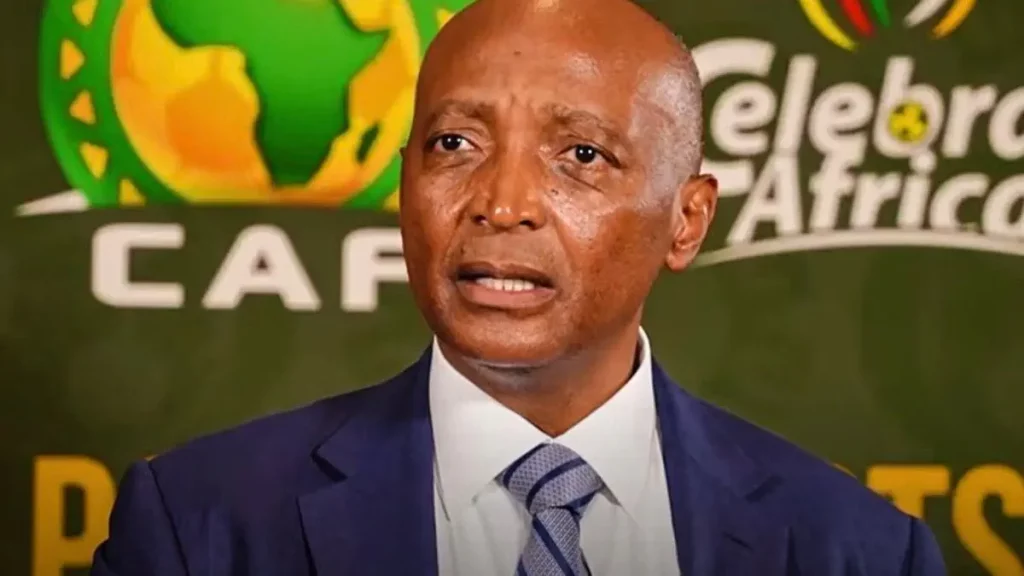
Football has always been more than a game in Africa. It is a platform for identity, pride, and continental connection. When that platform becomes associated with uncertainty rather than clarity, its unifying power begins to weaken.
CAF now faces the difficult task of reinforcing confidence in its institutions while ensuring that its decisions are understood not only legally, but ethically and transparently. That task requires more than communication. It requires a deliberate choice about what kind of institution CAF wants to be: one that manages crises as they arise, relying on emergency decisions and legal interventions to hold the system together — or one that invests in the governance foundations that make such crises less likely in the first place.
The AFCON 2025 final may now belong to Morocco in the record books. But the real legacy of this moment will be determined by whether African football uses it to strengthen its institutions or simply moves on until the next crisis emerges.
Football’s greatest victories are not always the ones won on the pitch.
Sometimes they are the ones won in how the game is governed.