Seven years ago, I returned to Nairobi without fully knowing what I was coming back to build. I had a sense—an intuition, perhaps—that football could be something more than a game in Africa, but I could not yet see the full picture. I only knew I had to begin. Today, on the eve of marking seven years since that return, I met a man who reminded me that this journey did not begin with me.
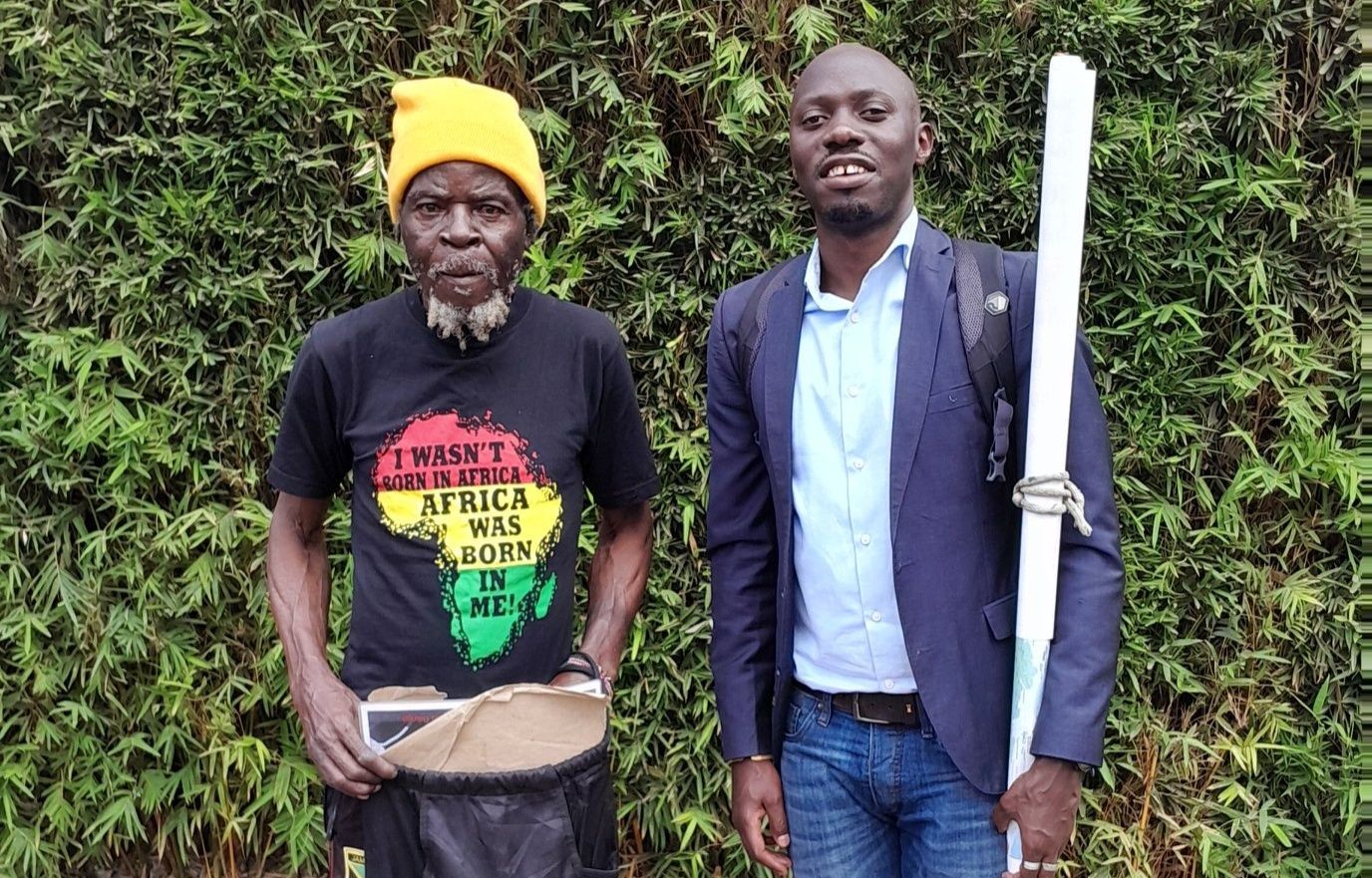
His name is Coach Ladino.
We had never met before, though he had first called me in October last year, at the height of preparations for the Africa Football Business Summit. At the time, I was immersed in logistics, partnerships, and execution, and while we spoke briefly, there was no space to meet. When he called again last week, I agreed, and we settled on a coffee meeting.
I arrived on time. He called to say he was ten minutes away, which stretched into twenty, and I could feel a quiet irritation building—the kind that comes with a structured day and a full schedule. I ordered my coffee and waited. When he arrived, he called again, and as I tried to guide him in, it became clear he was struggling to hear me. There was a bit of back and forth, and for a moment, the irritation lingered. Then I saw him.
He stood up and began walking in, frail, elderly, a Rastafarian moving slowly but deliberately. In that instant, something shifted in me. The irritation disappeared, replaced by curiosity, and then by attention. I watched as he made his way to the table, and when he sat down, we bumped fists. He ordered a “dawa” as I finished my coffee, and then he began to speak.
He told me he felt privileged to meet me, which immediately disarmed me. What followed was not a typical introduction, but a flow of lived experience—over fifty years in football development, an intimate understanding of its politics, and a perspective shaped not by theory but by time. He spoke of his years in the United States, including hosting the Nigerian national team during the 1994 World Cup, of Eastlands and Ziwani, of Kenyan football as it once was, and of what it has become. There was no sense of nostalgia for its own sake, but rather a grounded awareness of continuity and change.
At one point, he said something that stayed with me: that I was best placed to bring change. I did not rush to respond. I chose to listen, aware that I was sitting across from someone who had seen cycles I am only beginning to understand.
What struck me most was not just the content of what he said, but the energy with which he said it. At 77, he spoke with the conviction of someone who still believes there is work to be done, as if time had not diminished his sense of purpose. And then, almost in passing, he said something that felt both simple and profound: that every child should have a ball. In that moment, I realised that what I have been developing as a framework—Football as Infrastructure—has always existed in lived experience. It has always been understood, not articulated in papers or models, but embodied by those who have been closest to the game.
I am not inventing something new; I am giving language to something that has long been known.
As we drew toward the end of our meeting, he reached under the table and handed me three things: a map of the world, a map of Africa, and a Kenyan flag. He told me to hang them in my office and mark everywhere I go. It struck me immediately that this was more than a gesture. It was symbolic in a way that did not need explanation—the world representing vision, Africa representing mission, and Kenya grounding identity.
I had another meeting to attend, and I let him know in advance that I would need to leave, though I would have stayed longer. There was more to learn. We tried to take a picture together, and after a couple of refusals from people around us, we eventually found someone willing. Then we parted ways.
Later that evening, I looked him up and found what I suspected. Coach Ladino is a known figure in certain circles, particularly in Ziwani and Eastlands, yet largely absent from the broader narrative. And I found myself asking a simple but unsettling question: Do we have sports journalists in Kenya capturing these stories, or have we become so focused on results, transfers, and controversy that we are losing sight of the people who built the game?
My heart is fuller tonight, not because something extraordinary happened, but because something real did. Seven years ago, I came back to Kenya to build, and today I was reminded that I am building on foundations laid by others, many of whom remain unseen, unheard, and undocumented. The work, then, is not only to build forward, but also to remember, to connect, and to ensure that what has been carried is not lost.
Every child should have a ball. And every generation should know who carried the game before them.