When Kenya, Uganda and Tanzania were awarded the rights to host the 2027 Africa Cup of Nations, it was rightly celebrated as a historic moment for East Africa. For decades, the region had watched other parts of the continent host Africa’s premier football tournament while its own ambitions remained unrealised. AFCON 2027 represents far more than a sporting event. It is an opportunity to accelerate infrastructure development, strengthen regional integration, attract investment, boost tourism and showcase East Africa to the world.
The Soft Infrastructure Gap
Yet as preparations gather pace, it is becoming increasingly clear that our understanding of readiness remains heavily focused on physical infrastructure. Stadium construction, training facilities, roads, railway and accommodation dominate discussions. These investments are important and, in many cases, long overdue. However, major sporting events are not ultimately defined by the infrastructure they build. They are defined by the value they create.
The challenge facing East Africa is that while we are racing to complete the hard infrastructure, we have spent far less time building the soft infrastructure required to maximise the tournament’s impact. A successful AFCON requires more than venues and transport networks. It requires people, skills, institutions and systems capable of transforming a football tournament into a development opportunity. The programmes needed to prepare young people for careers in event management, hospitality, tourism, media, logistics, security and sports administration remain largely absent. Local businesses have not been systematically equipped to benefit from the influx of visitors and investment. And no clear mechanism has been established to ensure that the tournament’s economic and social benefits extend beyond the month in which it is played. Or at least one has not been articulated publicly.
These gaps matter because hosting a major sporting event should not be viewed as a construction project. It should be viewed as a nation-building exercise. Stadiums alone do not create jobs. Airports alone do not strengthen communities. Infrastructure becomes transformative only when it is connected to human capital development, institutional capacity and long-term economic planning.
Underlying all of this is a question of legacy. Across Africa, major sporting events are often celebrated for their immediate success while insufficient attention is paid to what remains after the final whistle. Success becomes measured through attendance figures, television audiences and positive headlines rather than through long-term economic and social outcomes. Yet the true value of hosting AFCON should be assessed by what it leaves behind.
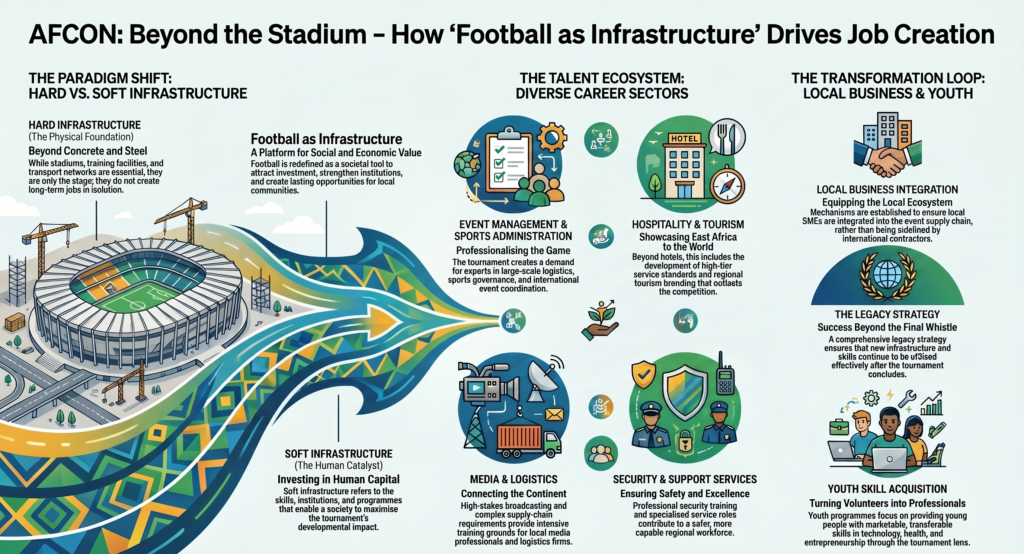
How many jobs will be created as a result of the tournament? How many young people will acquire marketable skills? How will tourism benefit? How will local businesses be integrated into the event ecosystem? What opportunities exist to connect football with education, health, technology and entrepreneurship? How will the new infrastructure be utilised after the tournament concludes? These are not secondary questions. They are the questions that determine whether AFCON becomes a catalyst for transformation or simply another event that passes through our region. Answering them properly takes time East Africa does not currently have.
A Timeline Under Strain
This is one reason why the current timeline deserves closer examination. Morocco hosted AFCON 2025 until January 2026, so East Africa is scheduled to host AFCON 2027 less than 18 months later. Rather than viewing Morocco’s tournament simply as the last edition of the competition, East Africa should regard it as a valuable learning opportunity. Morocco has spent years investing not only in football infrastructure but also in tourism, talent development, sports governance, international partnerships and sports diplomacy. Its approach offers lessons that extend far beyond stadium construction.
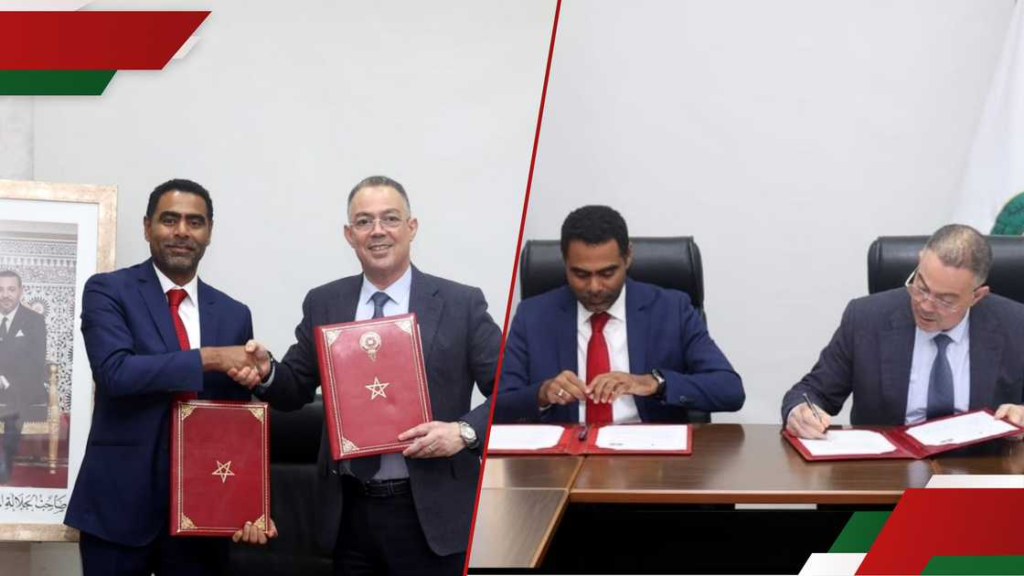
The reality is that there is limited time between the conclusion of AFCON 2025 and the start of AFCON 2027 in East Africa. Meaningful learning requires more than observation. It requires time to study what worked, understand what did not, engage with host institutions and adapt those lessons to local realities. A tournament of this scale should benefit from a deliberate lessons-learned process rather than assuming that success can simply be replicated. If East Africa is serious about maximising the value of AFCON, then Morocco’s experience should inform our planning in a structured and intentional manner. Up to now, there has been no such initiative despite Morocco’s and Kenya’s football federations sharing an MoU on technical cooperation.
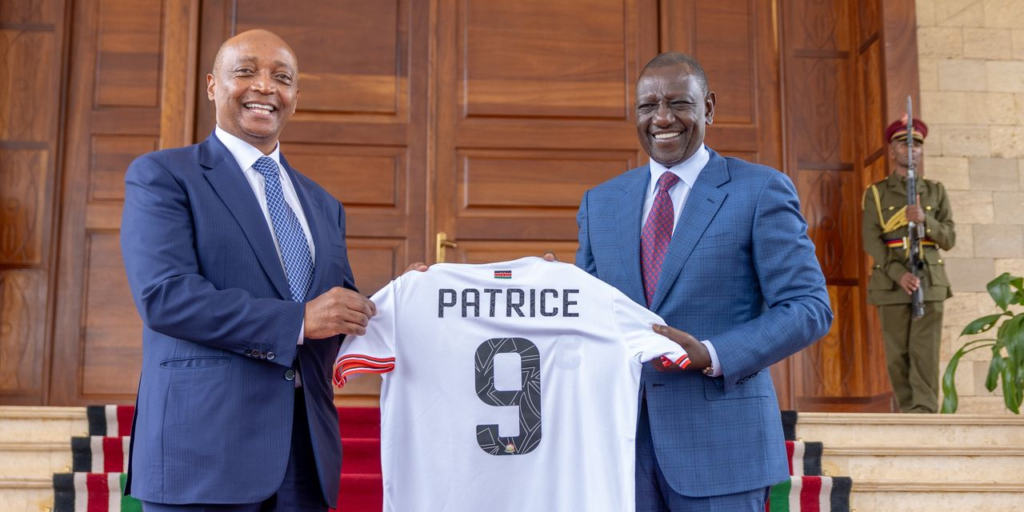
This argument is no longer hypothetical. In February 2026, reports emerged that CAF’s Executive Committee was weighing exactly this question, prompted in part by Kenya’s own Local Organising Committee raising concerns about the country’s readiness and security capacity ahead of its August 2027 general election. CAF President Patrice Motsepe subsequently moved to close the debate, telling reporters in Dar es Salaam that AFCON 2027 would proceed in East Africa as planned. That statement reaffirms CAF’s institutional commitment to the region, but it does not resolve the questions this article raises. Confidence that a tournament can be delivered is not evidence that it will be delivered well, and a firm denial is not a substitute for a structured assessment of readiness, security capacity and legacy planning. The case for a strategic delay should be evaluated on its merits, not closed by a reaffirmation of a prior commitment.
There is also a political dimension that deserves more precision than it is usually given, and recent events have only sharpened it. Tanzania’s general election in October 2025 was followed by serious unrest, and Uganda’s election in January 2026 saw its opposition leader driven into hiding amid a security crackdown. Both episodes show that the risk this article is concerned with is not abstract. Yet in both cases, the disruption arrived with some separation from the host country’s football obligations: CHAN concluded on 25 August 2025, meaning Tanzania’s election followed by roughly two months and Uganda’s by roughly four and a half months, giving each country at least some room to recover institutional and security capacity before its next major commitment. Kenya, as the lead host of a tournament considerably larger than CHAN, has far less of that room. AFCON 2027 is scheduled to conclude only about a month before Kenya’s own general election in August 2027, compressing two of the country’s largest logistical and security undertakings into a single, narrow window. There is a credible concern that Kenya’s police and security services cannot adequately resource both events in that timeframe. This matters because Kenya’s elections have historically carried more volatility than Tanzania’s or Uganda’s, a legacy still shaped by the violence of 2007/08, and because Kenya, as lead host, sets the tone for how the entire tournament is perceived internationally. Regardless of the precise level of risk, perceptions shape decisions, and travellers, broadcasters, and sponsors typically act on perception rather than granular local knowledge.
At the same time, elections naturally consume government attention, public resources and institutional capacity. Senior political leaders become focused on campaigning, public institutions shift priorities and national conversations become dominated by electoral issues. The question is not whether Kenya can successfully host AFCON and conduct an election in the same year. The question is whether doing so creates avoidable distractions and uncertainties at a time when East Africa should be focused on presenting its best face to the continent and the world.
The calendar adds a further complication that any proposal to delay AFCON 2027 must address directly, rather than around. CAF confirmed in December 2025 that the tournament will move to a four-year cycle from 2028 onward, and a separate host for the 2028 edition is already under consideration, with Morocco, South Africa, Botswana and Ethiopia among the countries that have expressed interest. Simply pushing East Africa’s tournament back a year without resolving this would risk three editions of AFCON in three consecutive years: Morocco’s tournament concluding in January 2026, East Africa’s delayed tournament in 2028, and whatever was separately planned for 2028 either scrapped or pushed again. For a continent already stretched thin on hosting resources, that sequence serves no one, and it would further erode the time available for the knowledge transfer between hosts that this paper has already argued is essential.
A more coherent path is for East Africa’s delayed tournament to become the 2028 edition outright, the opening tournament of the new four-year cycle, rather than competing with it. This turns an apparent scheduling collision into a natural reset point: East Africa hosts once, properly, with adequate preparation time, and the continent’s tournament calendar settles into its new four-year rhythm from there, with the next edition following in 2032. This is not simply the more convenient outcome for East Africa. It is the version of the calendar that best serves CAF’s own stated rationale for moving to a four-year cycle in the first place.
A Case for a Strategic Delay
This is where the concept of Football as Infrastructure becomes relevant. Football should not be viewed solely as entertainment or competition. It should be understood as a platform through which societies can generate economic, social and developmental value. When viewed through this lens, AFCON becomes more than a football tournament. It becomes an opportunity to strengthen institutions, develop human capital, attract investment and create lasting opportunities for communities.
For these reasons, the question of a strategic delay should not be considered settled by CAF’s February statement. East Africa should re-engage CAF in a structured discussion about postponing AFCON 2027 to 2028. Such a proposal should not be interpreted as a sign of weakness or unpreparedness. On the contrary, it would demonstrate a commitment to maximising the return on one of the region’s largest sporting investments. An additional year would provide space to complete critical infrastructure, learn from Morocco’s experience, navigate political realities, resolve the calendar question on East Africa’s own terms and, most importantly, develop a comprehensive legacy strategy that extends beyond football itself.
The objective should not be to host AFCON as quickly as possible. The objective should be to host the most impactful AFCON in the competition’s history. East Africa has an opportunity to redefine what it means to host major events in Africa. By giving itself time to think beyond stadiums and to focus on people, institutions, and legacy, the region can ensure that AFCON becomes more than a tournament. It can become a catalyst for long-term economic and social transformation.
In the end, the true measure of success will not be whether East Africa stages a successful football competition. It will be whether football leaves East Africa stronger than it found it.