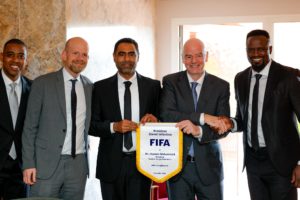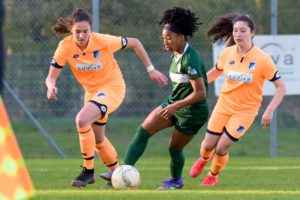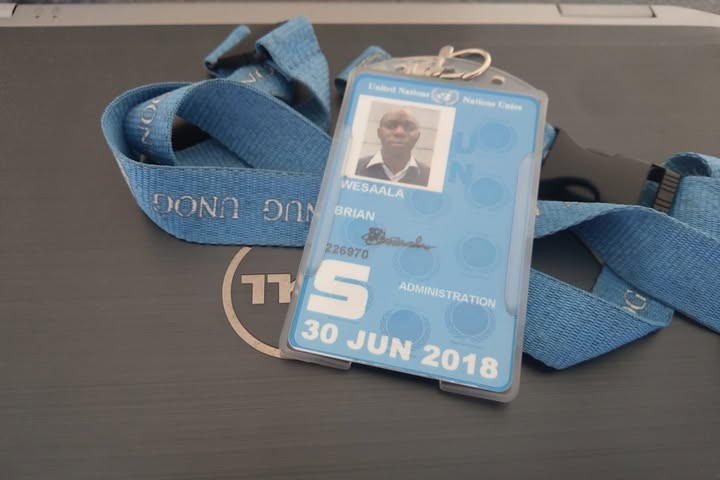
One of my final official meetings at the United Nations was with Medical Services.
By then, I had already been informed that my contract would not be renewed and had been away on sick leave for nearly two months. The work environment had become increasingly toxic, and I was mentally exhausted, uncertain about my future and carrying a growing sense that my life was pulling me in another direction entirely. Ironically, much of the tension in our office had emerged during the organisation’s transition from IBM Domino to Microsoft Exchange. At the time, I was part of the mail server administration team, and, like many colleagues working with legacy systems, I had a constant feeling that our roles were becoming increasingly vulnerable as new systems and structures emerged around us. Rumours kept swirling, too. Technology transitions are often presented as clean, exciting and inevitable, but internally they can create anxiety, silent competition and a deep sense of uncertainty about where one fits within the future being designed around them.
This is My Tribe
As the pressure slowly built, another world had already begun opening up before me through football. Earlier that year, I had enrolled in the Professional Master’s in Football Business at the Football Business Academy. This was before Zoom meetings became commonplace worldwide, and I still remember our first online introductions. As classmates from different countries introduced themselves and spoke about their journeys and dreams across football, sports business and innovation, I sat quietly listening and thinking to myself: “This is where I should be. This is my tribe.” It was one of those rare moments in life where something internally clicks into place. For the first time in a long time, I felt aligned. The conversations, the energy, the people, and the ideas all felt closer to who I truly was than the increasingly tense professional environment I was experiencing.
It was that late afternoon in my Geneva studio on Rue de la Servetter that I decided to take sick leave. I followed the process properly, visited the doctor and submitted a doctor’s note. Later, I was referred to a psychologist after telling my doctor that I did not feel like going back. My mind was already made up.
I still remember him clearly. He was Tunisian and, unsurprisingly, a football fan. During our conversation, he spoke about Espérance de Tunis and recalled their encounters with Gor Mahia. I smiled and told him that I was actually an AFC Leopards supporter. What began as a clinical consultation quickly became a football conversation.
As we spoke, I shared not only the challenges I was facing at work but also my growing fascination with football and my emerging ideas about its role in Africa’s development. The foundations of what would later become The Football Foundation for Africa were already taking shape, even if I could not yet fully articulate them.
After listening carefully, he looked at me and said something that stayed with me, “You sound like you have it figured out.”
At a moment when I felt institutionally lost, that simple observation mattered more than he probably realised, because it suggested that what I was experiencing was not simply collapse but transition.
Football Friends
During my “sick leave,” life developed a strange rhythm. Two or three times a week, I would play football during lunch hour with a group of immigrants, mostly from West Africa. We were not teammates in any formal sense, just football friends connected by the game. Sometimes, while playing, I would quietly wonder whether they had any idea what was happening in my life at the time — the uncertainty around my contract, the mental exhaustion and the quiet transition I was going through internally. But football has a way of temporarily suspending life’s heavier questions. For an hour or two, none of that mattered. We simply played. Looking back now, those lunchtime matches were probably doing more for my mental wellbeing than I realised at the time.
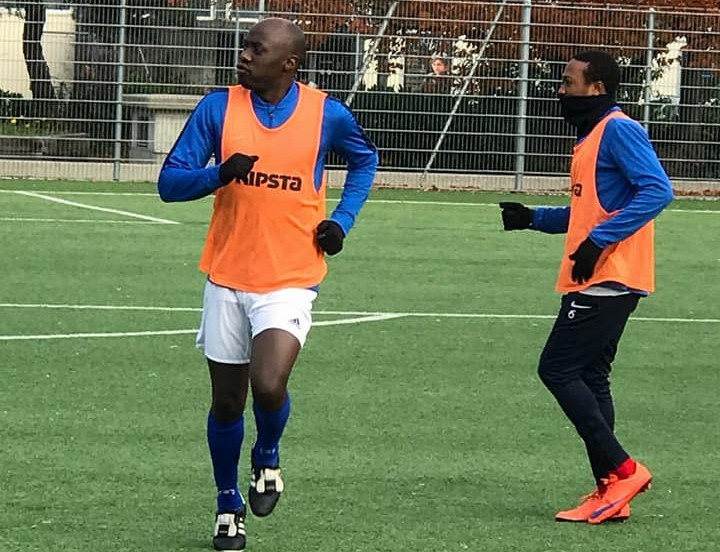
Interestingly, we shared the same football facility, Stade de Varembe, with the UN football team, which I had previously played for. One afternoon in the changing room, a former colleague jokingly asked me in French, “Tu joues avec les noirs là?” I laughed it off at the time, responding, “Oui, c’est mieux là.” Looking back, I realise I was already drifting away from the institutional world I had known for years and becoming more connected to another reality, one rooted less in titles, contracts and structures, and more in people, community and the simple universality of football. In many ways, those informal games with immigrants probably reflected the direction my life was unconsciously beginning to take long before I fully understood it myself.
Crossing Into Another World
Part of the Football Business Academy programme included attending Soccerex China in Zhuhai, China, which is how I ended up travelling to China and Hong Kong in April that year. In hindsight, the trip was not random tourism or escapism. It was part of a professional and personal transition that was already underway. It was my first sports business conference. Psychologically, I was crossing from one world into another, although at the time I did not fully appreciate how dramatically that transition would eventually unfold.
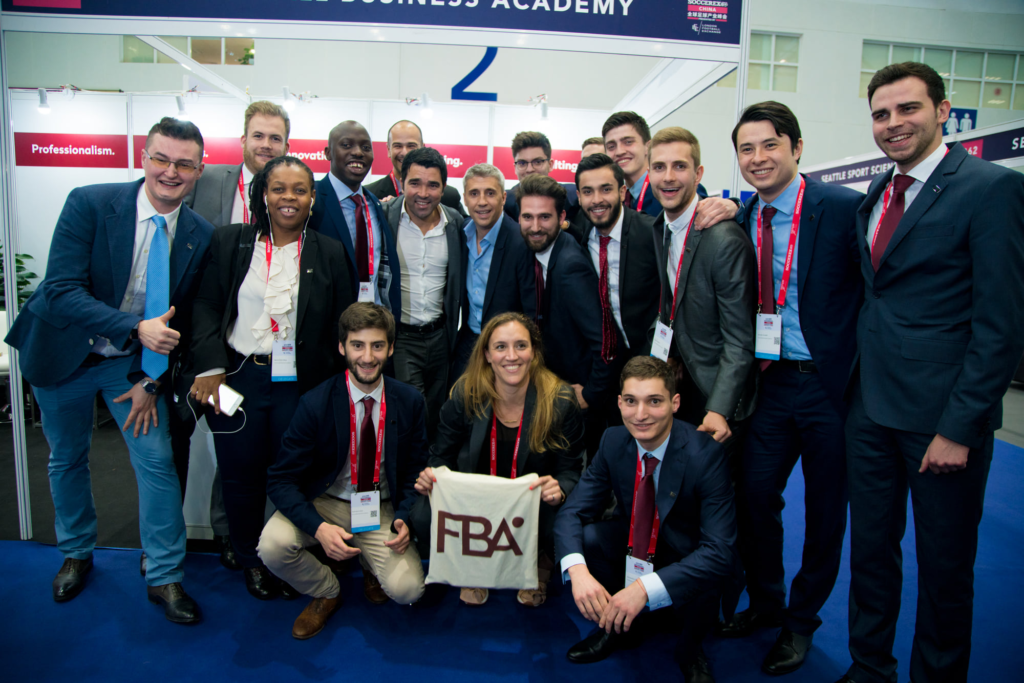
A few weeks later, while still on sick leave and with only about a month remaining before my contract renewal period, I received an email informing me that my contract would not be renewed. I replied politely and thanked the HR officer. There was no dramatic confrontation, no emotional outburst, just silence and acceptance.
“One Day You Will Read About Me”
By the time I eventually returned for my final appointment with Medical Services, the decision had already been made, and I had already been away for nearly two months. The lady doctor asked a few questions, and I explained everything honestly — the pressure, the environment and how close I had been pushed mentally. However, the China trip became the procedural breach that overshadowed everything else. Because I had travelled during sick leave, my leave was revoked, and I was required to refund two months’ salary. Luckily, I had the money, which is a story for another day.
At the time, I was bitter. Not simply because of the money, but because after years of service, the system suddenly felt incapable of seeing the human being behind the procedure. Before leaving, I remember telling the doctor, “One day you will read about me in your newspapers.” To this day, I honestly do not know where that sentence came from. Looking back now, it sounds dramatic, perhaps even arrogant, but in that moment, it was less a statement of certainty and more an act of survival. I needed to believe that my story would not end in that office.
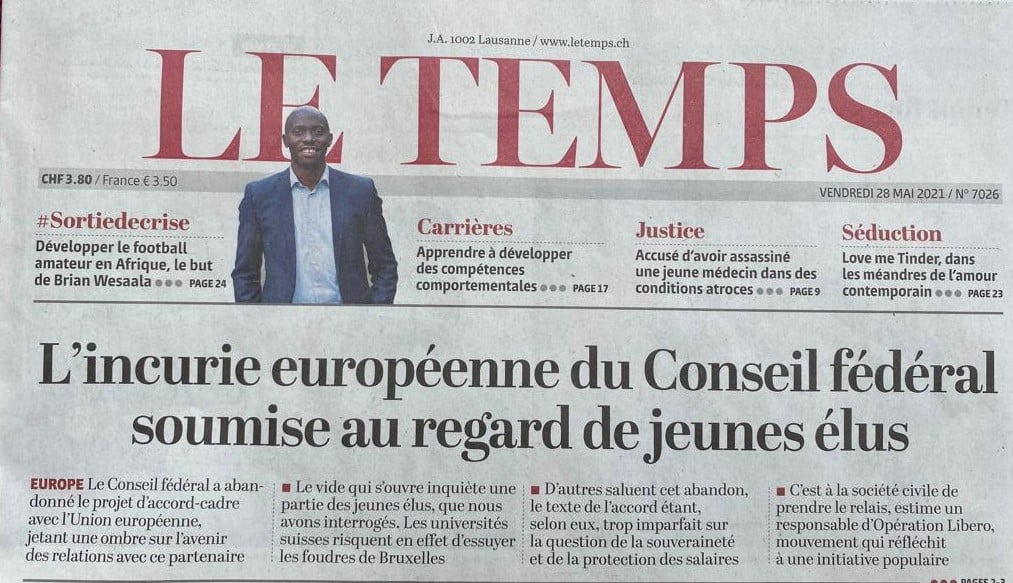
A few years later, my football journey was featured in Le Temps, one of Switzerland’s leading newspapers. Life has a strange sense of humour sometimes.
A Return of Microsoft
What I did not fully appreciate back then was that my technology background had never really left me. Even after transitioning deeper into football through and later developing initiatives such as the Africa Football Development Network, many of the ideas I found myself advocating for were deeply influenced by systems thinking. Concepts such as infrastructure, networks, interoperability, scalability, data layers, and ecosystem architecture all shaped my view of football’s role in Africa. In many ways, I have come to approach football less like a traditional administrator and more like someone trying to understand how complex systems connect people, opportunities and value.
That is why, years later, joining the GSIC Powered by Microsoft Ambassador Programme feels strangely symbolic. A decade ago, Microsoft represented uncertainty, restructuring and the possible end of my professional chapter at the United Nations. Today, it represents something entirely different: innovation, ecosystem building and the convergence of technology and football in service of Africa’s future.
Sometimes the experiences that appear disconnected are quietly preparing us for a future we cannot yet see. What once felt like collapse was, in many ways, a transition, not away from technology, but towards a deeper understanding of how technology, systems and human networks can help shape new possibilities for Africa through football.