
From Nigeria to Kenya, Zimbabwe, Congo-Brazzaville, Ghana and South Africa, recurring crises are exposing the limits of football autonomy without accountability—and the failure of normalisation as a substitute for institutional design.
The leadership crisis unfolding within the Nigeria Football Federation should not be treated simply as another episode in the turbulent history of Nigerian football. The immediate explanations are familiar: disappointing results, public frustration, allegations of financial mismanagement and growing pressure on the federation’s leadership. Yet the significance of what has happened extends far beyond the individuals who have left office.
The NFF leadership resigned shortly before a scheduled elective congress, leaving uncertainty over how Nigerian football would be governed through the transition. President Bola Tinubu subsequently called for comprehensive reform of the country’s football administration, while representatives of Nigerian football and government opened discussions with FIFA about the way forward. The possibility of a transitional or normalisation process has inevitably entered the conversation.
If this were an isolated incident, it would be a Nigeria story. It is not.
Across the continent, football federations are experiencing different stages of the same underlying governance problem. Kenya, Zimbabwe and Congo-Brazzaville have each experienced federation dysfunction, state intervention and FIFA suspension, although the precise circumstances and subsequent arrangements differed. Ghana went through a FIFA-appointed normalisation process following the collapse of its federation in 2018. South Africa is now dealing with deep internal conflict, leadership controversy and growing questions about the effectiveness of its own accountability structures.
These countries should not be placed into an artificially identical sequence. Some have been suspended, some have undergone normalisation, and others are still functioning while the pressure builds. What connects them is not a single procedure but a recurring institutional pattern: internal dysfunction becomes entrenched, public confidence deteriorates, political pressure intensifies, the state intervenes, FIFA invokes the principle of non-interference, and an externally managed process is introduced to restore formal order.
The names change. The statutes are amended. Elections are held. Football resumes. But the structural weaknesses that produced the crisis often survive.
Different countries, the same governance fault line
In Kenya, the government disbanded the Football Kenya Federation leadership in November 2021 and appointed a caretaker committee following concerns about the federation’s management and use of public funds. FIFA regarded the intervention as third-party interference and suspended Kenya in February 2022. The suspension was lifted nine months later after the government reinstated the federation’s executive committee.
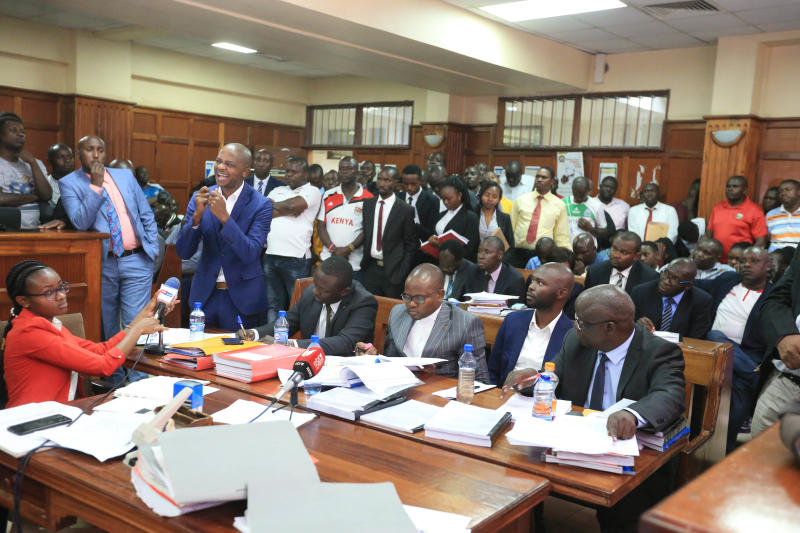
Yet the return to formal order, and even with new leadership, did not create lasting institutional stability. In April 2026, nine members of the new FKF National Executive Committee attempted to suspend federation president Hussein Mohammed, acting general secretary Dennis Gicheru and NEC member Abdullahi Yusuf Ibrahim over alleged irregularities involving KSh42.8 million in CHAN-related insurance procurement. FIFA rejected the suspensions as unconstitutional, while federation delegates subsequently turned their attention to the conduct and future of the NEC itself. (Nation Africa)
The merits of the allegations remain contested, but the episode is revealing. Less than two years after a new administration was elected on a reform platform, another major leadership dispute required FIFA to determine whether the federation’s own executive had acted constitutionally. Kenya therefore illustrates the central problem particularly clearly: leadership can change, and international recognition can be restored, yet the institution may still lack trusted internal mechanisms for investigating allegations, managing conflict and holding its senior officials accountable without triggering another struggle for control.
The institutional strain has also reached domestic competition. The start of the 2026/27 FKF Premier League has been halted by litigation over which promotion and relegation regulations apply, with separate High Court proceedings producing competing legal positions. The resulting uncertainty has affected clubs that had already recruited players, conducted preseason training and made contractual and stadium arrangements for the new campaign. With Kenya less than a year away from co-hosting the 2027 Africa Cup of Nations, the dispute demonstrates how weak governance does not remain confined to federation boardrooms: it disrupts competitions, compromises commercial relationships and transfers institutional risk directly to clubs, players and the wider football economy.
Zimbabwe followed a related but distinct path. FIFA suspended the Zimbabwe Football Association in February 2022 after the country’s Sports and Recreation Commission removed the ZIFA executive. In July 2023, FIFA lifted the suspension and appointed a normalisation committee mandated to run the federation, restructure its administration, review its statutes and electoral code, and organise elections. (FIFA)
Congo-Brazzaville was suspended in February 2025 following a dispute between the football federation and the country’s sports authorities. FIFA required, among other conditions, that full control of the federation’s headquarters and facilities be returned to FECOFOOT. The suspension was lifted three months later when FIFA determined that those conditions had been met. (FIFA)
Ghana offers an especially important case. In 2018, after the government sought to dissolve the Ghana Football Association following the Number 12 corruption exposé, FIFA and the government agreed to appoint a normalisation committee. The committee was tasked with running the association, reviewing its statutes and organising elections for new leadership.
The GFA returned to elected leadership in 2019. Still, Ghanaian football continues to wrestle with questions about transparency, public financing, domestic football development and the division of responsibility between the federation and the state. Recent debate about government-backed support for Premier League clubs illustrates how quickly questions about funding become questions about accountability: who provides the money, who administers it, what results should it produce, and who is answerable when those results do not materialise? (Modern Ghana)
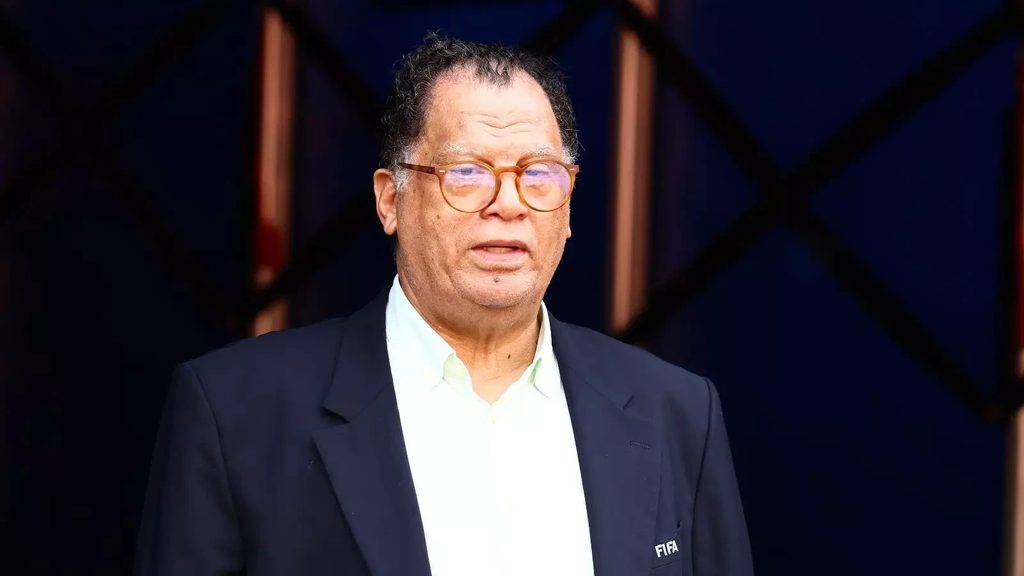
South Africa has not reached the point of government takeover or FIFA suspension, but its warning signs should not be ignored. SAFA President Danny Jordaan is facing fraud charges connected to the alleged use of federation resources for personal benefit—allegations he denies—while internal disputes have raised concerns about whether the association’s disciplinary and governance structures facilitate accountability or suppress dissent.
Nigeria is therefore not standing alone. It is simply the latest and most visible point on a much wider governance continuum.
We keep treating structural failures as personnel problems.
African football has become very good at diagnosing crises at the event level. We identify a corrupt official, an impatient minister, a disputed election, an underperforming national team or a federation president who has stayed too long. We demand resignations, the removal of the individuals, the appointment of a committee, and the organisation of another election.
That may change the people in the room, but it does not necessarily change the room.
Systems do not fail solely because of the personalities who occupy them. They also fail because of the way power, accountability, and oversight have been designed. If authority is highly concentrated, elections are easily controlled by established networks, dissent can be punished internally, financial disclosure is limited, and no credible independent institution can intervene early, replacing the president will not repair the system.
The next leader inherits the same incentives, the same institutional weaknesses and often the same political economy.
This is why so many federation elections are presented as moments of transformation but ultimately produce only a redistribution of positions. The electoral congress becomes the principal accountability mechanism, even when the voting constituency itself is dependent on the federation leadership for funding, appointments, competitions or other forms of patronage.
Under those conditions, an election can be procedurally valid while remaining institutionally incapable of producing meaningful accountability.
The missing circuit-breaker
The recurring crises reveal a crucial gap in the statutory architecture of many African football federations: there is no credible internal circuit-breaker between leadership failure and state intervention.
A well-designed institution should be able to detect financial, ethical, and administrative failures before they lead to collapse. It should have independent structures capable of investigating misconduct, enforcing disclosure requirements, resolving disputes and initiating leadership transitions without requiring a minister to dissolve the federation.
Too often, those mechanisms either do not exist or are insufficiently independent of the executive they are supposed to oversee. The same leadership may appoint ethics bodies they could be required to investigate. Electoral appeals may remain trapped within federation structures. Congresses may meet only periodically and receive information controlled by the executive. Audited accounts may be presented without providing stakeholders with a meaningful ability to interrogate expenditure, procurement, or conflicts of interest.
When these internal mechanisms fail, the government becomes the only domestic actor with enough authority to act. Its intervention then triggers FIFA’s rules on federation independence and third-party interference. FIFA can suspend the association or, in exceptional circumstances, appoint a normalisation committee under its statutory powers.
The result is a governance trap. The federation cannot correct itself; the state cannot intervene without risking international sanctions, and FIFA becomes the external constitutional authority, election court and institutional repair mechanism that the domestic system never created.
The contradiction between public money and private autonomy
The problem is sharper still because African football federations are rarely financially or operationally autonomous in any real sense.
Governments finance national teams, maintain stadiums, provide security, fund international travel, support tournament hosting and often settle player bonuses. Citizens then expect these public institutions to answer for failed campaigns, deteriorating leagues or unaccounted funds. Yet when a government tries to exercise authority over the body that spends the money, it risks being accused of political interference.
Neither extreme resolves this. Governments cannot simply be told to stay out of football, and ministers cannot be free to remove elected officials whenever public pressure rises — the first ignores where the money comes from, the second reopens the door to political capture.
The fix is not a philosophical resolution but a contractual one. Public funding should come with clear agreements defining responsibilities, deliverables, reporting requirements, procurement rules, audit rights and consequences for non-performance. A government should not need to seize a federation to find out how its money was used — the federation should already be obligated to show it.
Normalisation restores order, but does it create resilience?
Normalisation committees are often necessary. They can restore day-to-day administration, revise statutes, restructure secretariats, resolve immediate disputes and organise credible elections. In a genuine institutional vacuum, there may be no practical alternative.
But normalisation is an emergency intervention, not a complete governance philosophy.
Its success is often measured by whether a federation resumes operations, adopts revised statutes and returns to elected leadership. Those are important outcomes, but they do not necessarily show that the federation can now prevent the next crisis.
A technically compliant statute may still leave power overly concentrated. An election may be accepted by FIFA even if it remains dominated by patronage networks. A new executive may inherit weak commercial systems, inadequate financial controls and no independent supervisory mechanism. Once elected leadership returns, the extraordinary external oversight disappears—and the old incentives begin to reassert themselves.
The central question should therefore not be whether normalisation returns a federation to formal compliance. It should be whether it leaves behind an institution capable of correcting itself.
Ghana’s experience is instructive precisely because it demonstrates that completing normalisation does not end the governance conversation. Zimbabwe’s normalisation process included the review of statutes and the electoral code, but its lasting value will depend on how those rules operate after the committee has gone. Kenya returned to international football after the previously removed executive was reinstated. Still, the reinstatement resolved the FIFA dispute more directly than it resolved the deeper disagreements that had prompted government intervention.
A federation is not resilient merely because its suspension has been lifted.
From reactive normalisation to institutional design
African football needs to move from repeatedly repairing collapsed federations to designing institutions that are less likely to collapse.
That begins with statutory oversight mechanisms that are genuinely independent of federation executives. Audit, ethics and compliance bodies should have transparent appointment processes, protected mandates and the authority to publish findings. Their members should not simultaneously occupy positions that make them dependent on the leadership they oversee.
Federations also need credible internal dispute-resolution systems, with independent appeals and clear timelines. Stakeholders should not have to seek government intervention or assistance from FIFA whenever electoral or constitutional disputes arise.
Financial transparency must move beyond the annual approval of accounts by Congress. Federations receiving public money or development funding should publish accessible financial reports, disclose material contracts, identify conflicts of interest and explain how resources are distributed across national teams, domestic leagues, women’s football, youth development and grassroots programmes.
Term limits and eligibility rules should be designed to prevent indefinite entrenchment without depriving institutions of experience. Electoral bodies should be separated from incumbent executives, and the composition of congresses should be examined to ensure that players, women’s football, coaches, referees, leagues and grassroots stakeholders have meaningful representation.
Most importantly, statutes need clear emergency provisions. If a president or executive committee loses legitimacy, becomes incapacitated, or faces serious criminal or ethical proceedings, the federation should have an internal legal process for temporary leadership, independent investigation, and—where necessary—early elections. Government takeover and FIFA intervention should be the final safeguards, not the first functional remedies.
Nigeria does not lack the people capable of designing such a system. It has some of Africa’s most respected expertise in corporate governance, banking, telecommunications, law, energy, oil & gas, risk management and institutional reform. Similar expertise exists across the continent.
The talent is not missing. The structure that allows that talent to govern football is.
The event is Nigeria. The problem is continental.
Nigeria’s immediate challenge is to manage its leadership transition without replacing one unstable arrangement with another. But the larger opportunity is to resist treating this as a temporary vacancy to be filled before football continues as usual.
The question is not only who should lead the NFF next. It is a matter of what kind of institution that person should be asked to lead, what limits should be placed on their authority, who should independently scrutinise their decisions, and how the system should respond when leadership fails again.
The same questions apply in Kenya, Zimbabwe, Congo-Brazzaville, Ghana, South Africa and elsewhere. These countries may be at different stages, but they are confronting the same unresolved relationship between federation autonomy, public responsibility and institutional accountability.
Until African football federations build credible oversight and dispute-resolution mechanisms into their own structures—not borrowed from FIFA after collapse—the cycle will continue. It may not repeat in precisely the same sequence, but it will produce the same outcome: crisis, intervention, temporary repair and renewed vulnerability.
Nigeria is the immediate event. The warning signs are visible elsewhere. The pattern is continental, and the structure beneath it is the conversation African football can no longer afford to avoid.
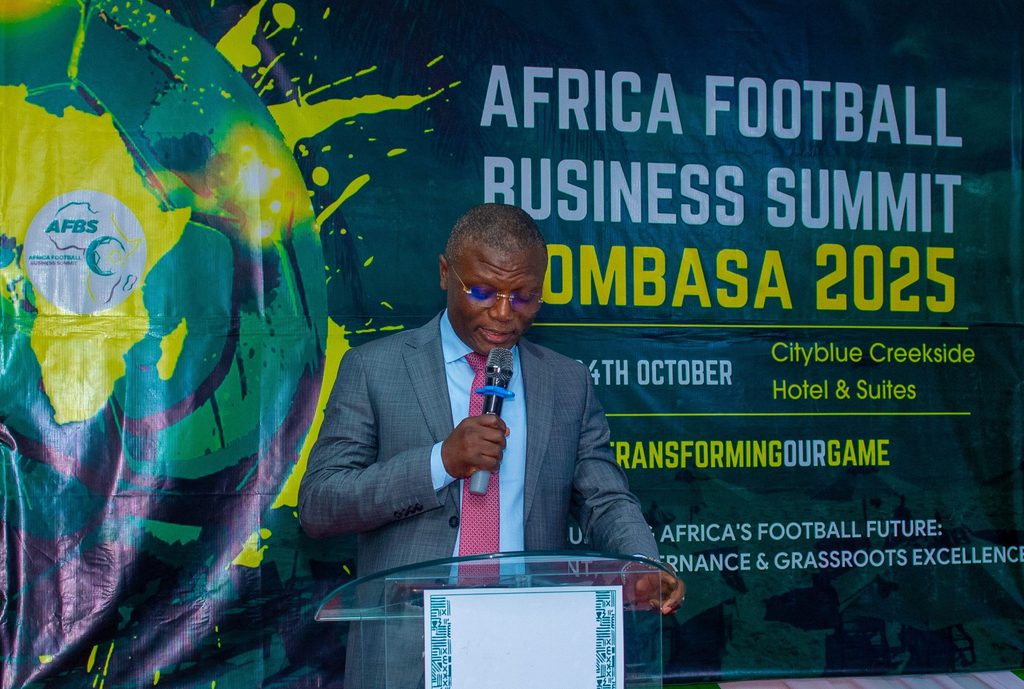
These questions will form part of the governance conversation at the Africa Football Business Summit 2026 in Accra this October. Through African Football Governance 2.0, we want to explore what a new institutional model for the continent could look like—one that moves beyond reactive normalisation and towards deliberate structural design.