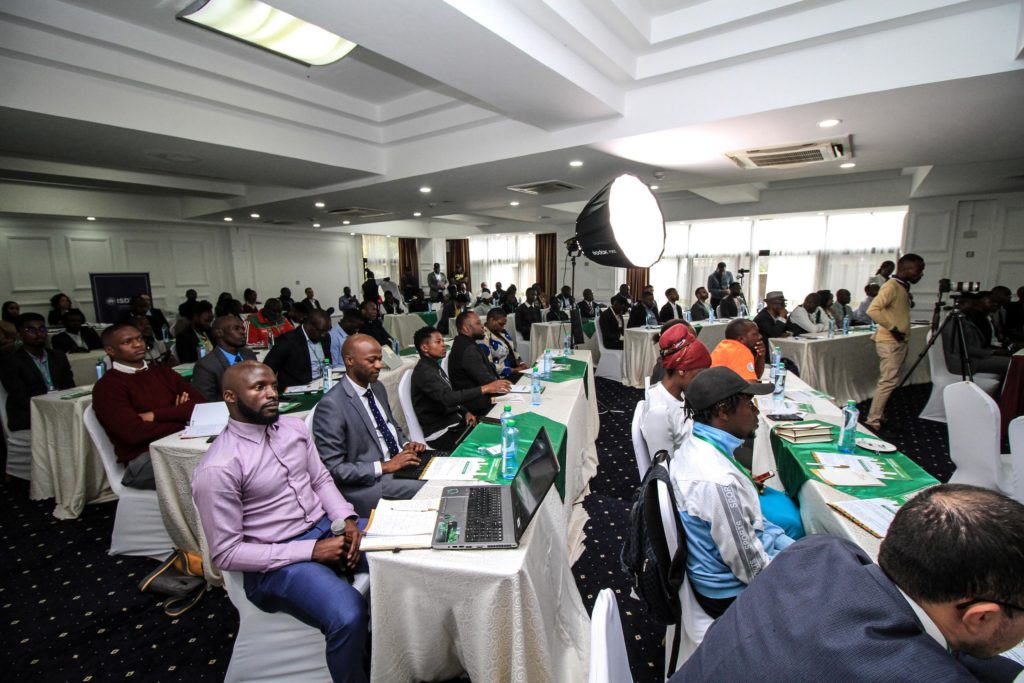
This year, the Africa Football Business Summit heads to Accra, Ghana, for its fifth edition, marking the first time the platform will be hosted outside Kenya. It is a significant milestone, not just for the Summit itself, but for the broader idea that African football can build and sustain its own platforms for thought leadership, investment, policy, and collaboration.
As preparations gather momentum for Accra 2026, I have found myself reflecting deeply on the journey that brought us here. Today, people see the partnerships, international speakers, growing continental network, and the conversations shaping the future of African football. What they do not see is how close the Summit came to never happening.
The story of the first Africa Football Business Summit actually begins on the 15th Floor of Anniversary Towers in 2021. Having failed to attend what was to be the inaugural World Football Summit in Durban in 2020 due to COVID, and gained a measure of notoriety hosting the Africa Football Business Show, I remember standing up and telling Collins Marita or MG2, my trusted and only colleague then, that I would organise the first Africa Football Business Summit. He looked at me, somewhat confused, and asked, “Where did that idea come from?” I told him it just came to me, and I know it will be great, and we will do it in Rwanda!
At the time, I was convinced Rwanda was the right place to launch the platform. I made at least five trips there in 2021 and 2022, trying to bring the vision together, driven by the belief that African football and sports needed a space that looked beyond the pitch and treated the game as a serious economic, social, and development ecosystem. I wanted a platform that allowed Africans to drive the agenda while remaining global in its reach and influence, just like the game itself. The idea felt clear in my mind. I had attended a few conferences. I shared the idea with my Advisory Board, and they supported it, launching my trips to the land of a thousand hills.
I would travel to Rwanda, stay for a week or two, meet stakeholders, and try to secure institutional and financial support. Yet despite all the effort, the Kigali plans eventually collapsed in June 2022, forcing me to postpone the event (from September to October) and shift to Nairobi, disappointed, but still convinced the idea itself was bigger than the setback. It was a year when we had both AFCON and the World Cup.
What I had not anticipated was how difficult it would be to convince people around me that the Summit was worth believing in and investing in.
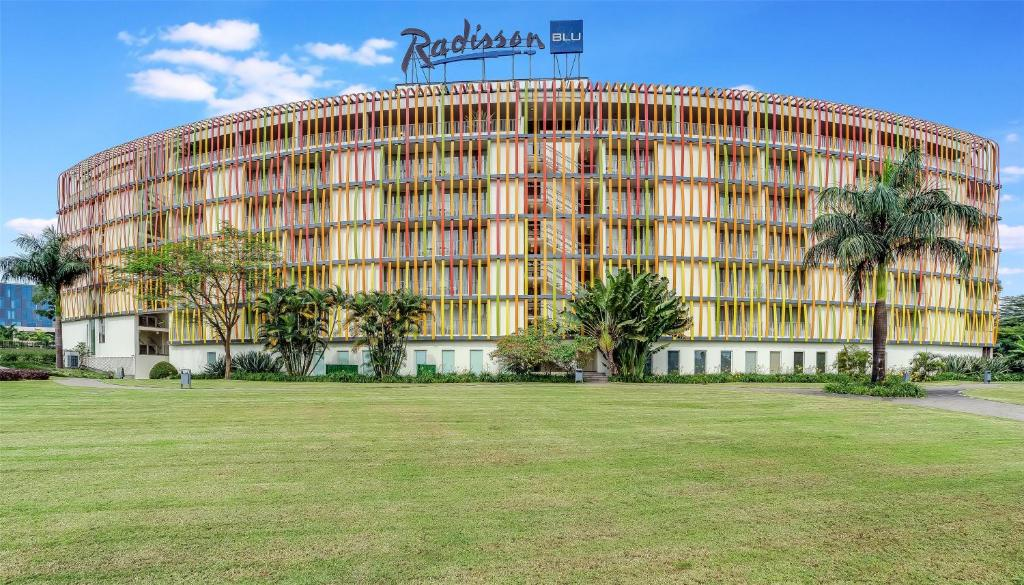
I expected the government, Kenyan corporates, football stakeholders, and the media to immediately understand the significance of what we were trying to build. Instead, the response was largely silent. Meetings produced polite conversations and some praise but little commitment, and even the media showed almost no interest, despite my interviewing Arsene Wenger in the lead-up to the Summit. Still, we pushed on, having put down Radisson Blu as the conference venue, hoping momentum would gradually build as the event approached.
Then, with less than ten days to the conference, everything collapsed again.
Because we could not raise the required deposit in time, the hotel cancelled our booking. I remember the feeling vividly. It was a mixture of exhaustion, anxiety, embarrassment, and stubborn determination. By that stage, I had already invested so much emotionally and financially into the idea that quitting no longer felt like an option, even though the situation seemed impossible.
In desperation, I turned to my alma mater, Strathmore University. I had recently completed an entrepreneurship programme there and knew they had conference facilities that could potentially accommodate us. I explained the situation openly and hoped that perhaps they would support the vision, or at least help us navigate the crisis. Instead, the room rates were increased.
Looking back, I understand institutions have their own realities and commercial considerations. At the time, it felt devastating. You quickly learn that when people sense desperation, some become transactional. I remember that late afternoon, I left feeling even more uncertain about how the Summit would survive, but still knew I could pull a few strings through some people I knew well.
As I shifted my attention to Strathmore, I asked my colleague, Janet, to go to the Weston Hotel to inquire about accommodation rates for our international guests. Later that evening, we had our usual end-of-day catch-up and mentioned she had met someone there who wanted to host the conference and would like to meet us the following morning. I hardly slept that night, my mind racing through every possible scenario.
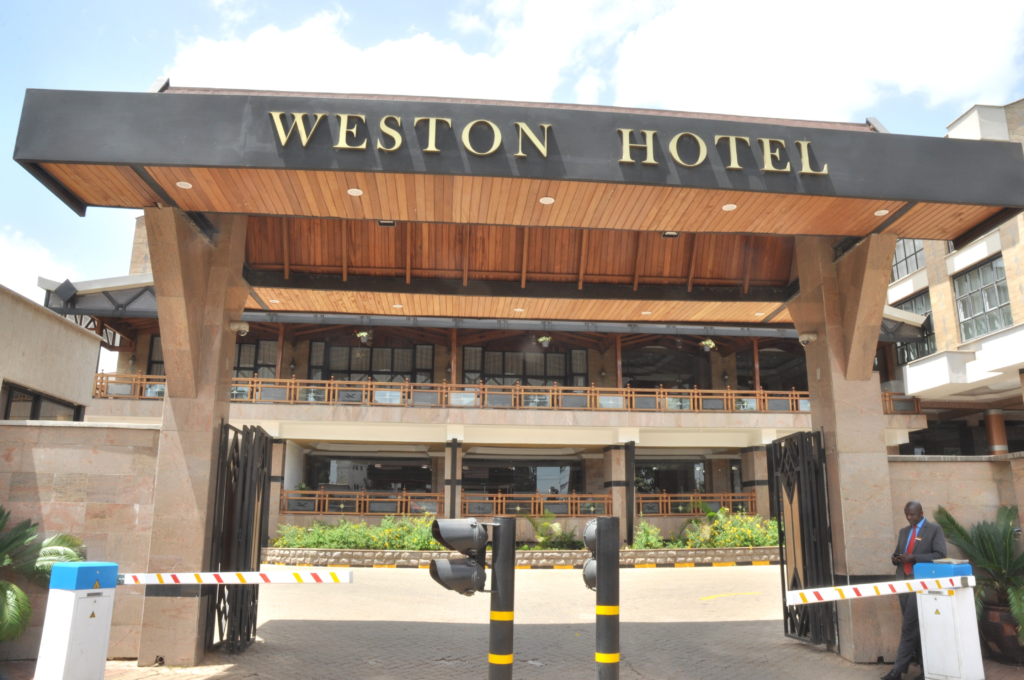
The next morning, we arrived at Weston and were welcomed to breakfast by a gentleman named Cosmas Chumba. I explained everything to him honestly — the Kigali collapse, the cancelled venue, the financial situation, and the larger vision behind the Summit. After listening carefully, he asked me a simple question: “How much do you have?”
The honest answer was almost nothing.
I told him we had no money at the time, but that we could try to raise some that very day. He paused briefly and then agreed to host the conference and accommodate our guests. Later, he would tell me that he saw honesty in my eyes. With less than a third of the required amount, he chose to trust us anyway.
What stayed with me most was what he said next: “We will know how to manage the rest after.”
That single decision changed everything.
To this day, I remain deeply grateful to Cosmas and the Weston Hotel team because, in many ways, they carried the first Africa Football Business Summit (and the two that followed) when almost nobody else believed it could work. Looking back now, I realise that what he offered was much bigger than discounted conference facilities. At a moment when the entire idea seemed to be collapsing around us, he offered belief.
There was another important story unfolding quietly in the background during that period.
Around that time, I regularly played football matches at Sadili Oval, and it was through those sessions that I met William Musina or Wille, a talented young footballer who had previously played abroad and featured in Kenya’s youth national teams. When I first joined the group, he stood out immediately as an excellent player, but over time, I noticed his form and energy beginning to drop. One day, I asked him to come early for training because I wanted to understand what he was going through. He opened up about failed trials, frustrations in football, and the emotional weight that many players quietly carry as careers become uncertain.
We became friends.
When the Summit approached, I wanted to support him by giving him business through airport pick-ups for our guests. He was working for his uncle’s transport company.
One of the guests we welcomed was Anthony Baffoe, the Ghanaian football legend and former CAF Deputy Secretary General, who was then working as a FIFA consultant. I remember going to pick him up at the airport with Wille and feeling deeply uncomfortable that we could not provide the kind of welcome I thought someone of his stature deserved. I kept thinking journalists were supposed to be there and that the moment should feel bigger than it did.
Instead, it was just the two of us.
When Anthony walked out, I approached him, introduced myself, and apologised for the lack of a proper reception. I still remember his response clearly. He told me, “Brian, you didn’t have to come. I know you’re tired. I would have found my way to the hotel.” Another delegate who was on the same flight as Mr Baffoe joined us.
We got into the car and spent the drive having a genuinely wonderful conversation. William was especially excited to be transporting a football legend and asked if he could take a few pictures when we dropped him off at the Radisson Hotel. Amid the uncertainty and last-minute scrambling, Anthony had accidentally been booked into the Radisson Arboretum instead of the Radisson Blu Upper Hill, where the Summit was taking place. In hindsight, the mix-up felt symbolic of the entire period
Wille would then continue with the airport pick-ups.
As we spoke more, he got to understand the challenges surrounding the event, and he shared the situation with his uncle. His uncle responded by offering the remaining airport transfers free of charge.
At the time, it may have seemed like a small gesture, but it meant everything. What strikes me now is how naturally football itself created the support system that helped the Summit survive. A simple community football environment had evolved into a mix of friendship, emotional support, logistics, and operational survival.
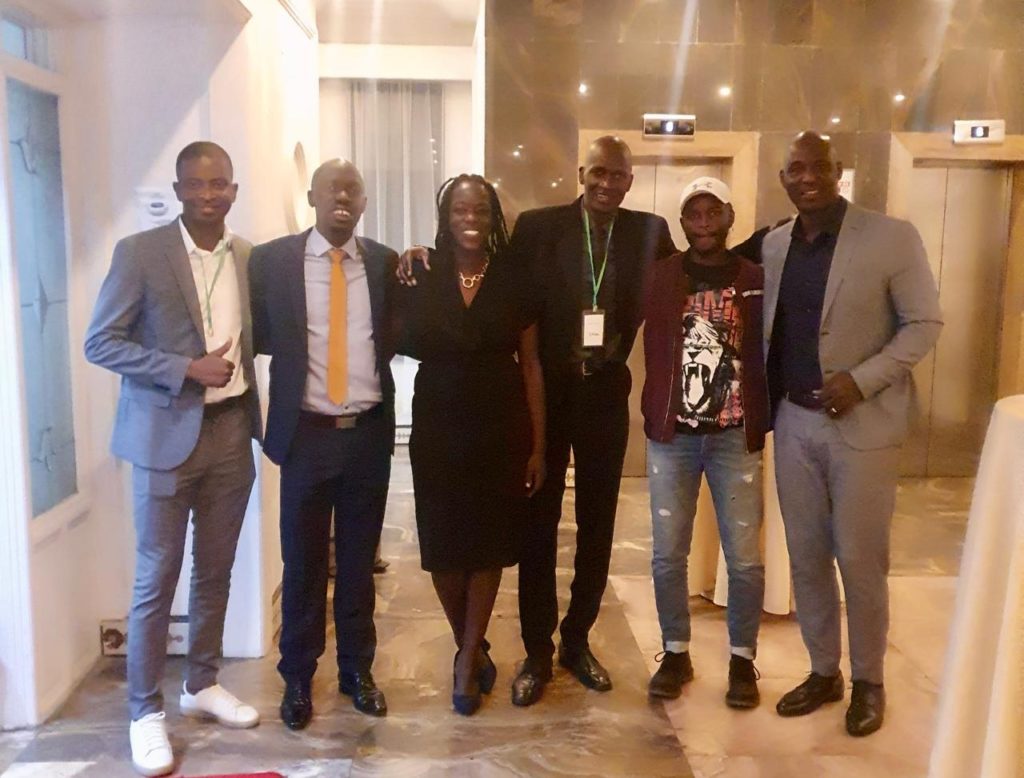
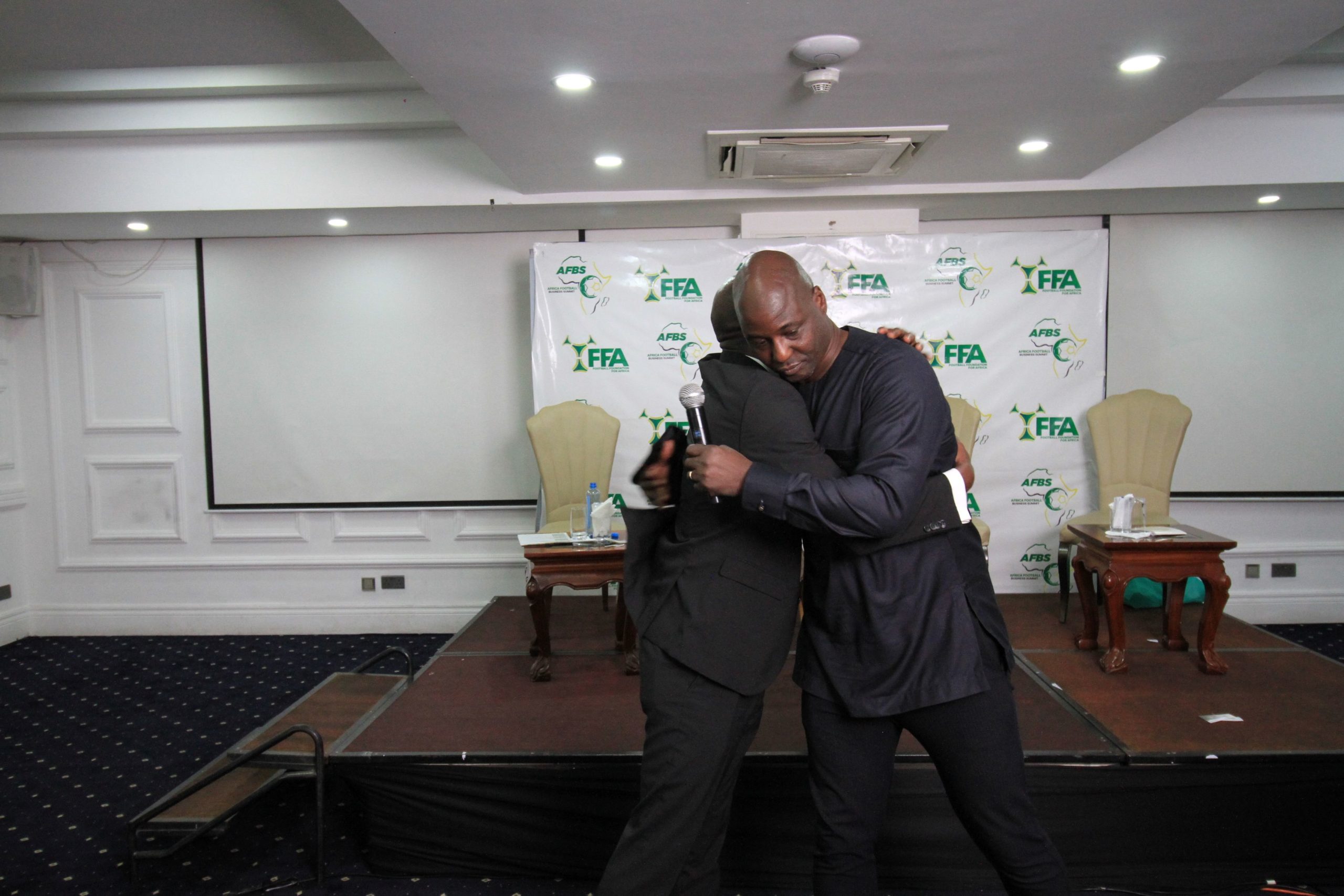
Despite all the uncertainty surrounding the event, the Summit somehow came together, and by the end, Anthony Baffoe had effectively become the Chief Guest of the inaugural Africa Football Business Summit. After the conference, he gave me a congratulatory hug and told me I had done well, adding that I should let him know if I ever needed his support.
That moment has stayed with me ever since.
Not because it felt like success in the conventional sense, but because it felt like recognition of the struggle behind the scenes — the sleepless nights, the improvisation, the disappointments, and the stubborn refusal to let the idea die.
Looking back now, what strikes me most is who actually carried the first Africa Football Business Summit. It was not major institutions, powerful football stakeholders, or large sponsors that kept the vision alive. It was people. A hotel manager who chose trust over guarantees. A young footballer navigating the uncertainty of life after failed opportunities. An uncle running a transport business. Friends and colleagues who simply kept showing up.
The first Africa Football Business Summit was not built on abundance. It was built on belief, honesty, relationships, and the willingness of ordinary people to help something meaningful survive long enough for others to eventually see its value. As the Summit now prepares to head to Ghana for the first time, I carry those memories with immense gratitude because they remain a reminder of how many important things begin: long before institutions catch up, movements are often carried by people who simply decide to believe.