There is a familiar rhythm to Kenyan football crises. An allegation surfaces. Factions form. Courts are approached. FIFA is called upon. A caretaker committee is appointed, or a president is removed, or a federation is dissolved. The dust settles. The next cycle begins.
We are in that rhythm again.
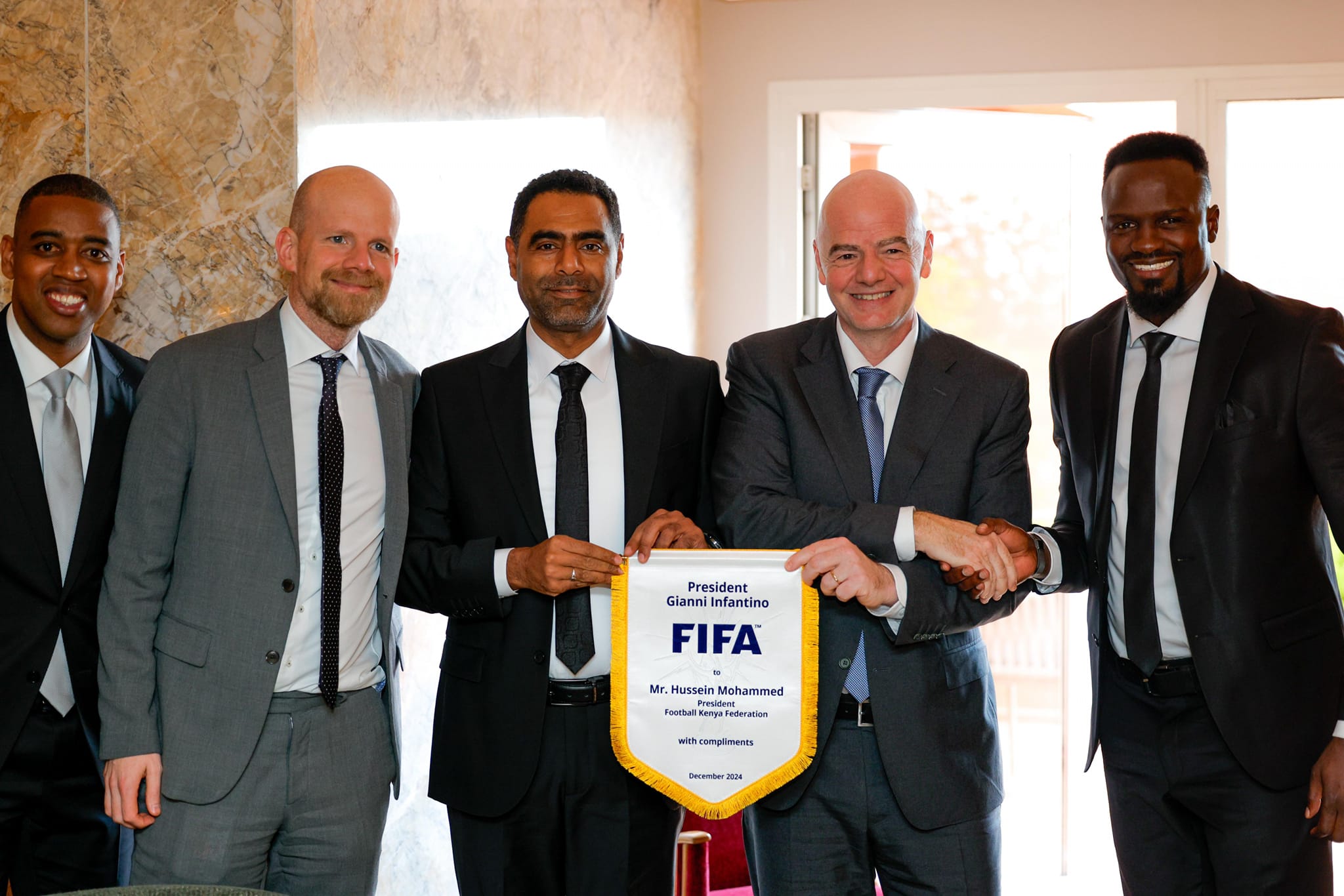
The Ethics and Anti-Corruption Commission is investigating Football Kenya Federation President Hussein Mohamed over allegations relating to the procurement of tournament insurance for CHAN 2025, a contract reportedly awarded to Riskwell Insurance Brokers Limited, a firm incorporated barely forty days before receiving KES 42 million in brokerage fees, unlicensed by the Insurance Regulatory Authority, and absent from the register of the Association of Insurance Brokers of Kenya. Nine of twelve National Executive Council members have voted to remove him. The High Court has halted that removal. The Sports Disputes Tribunal has halted the NEC decision. FIFA and CAF have been monitoring the situation. The Cabinet Secretary for Sports says he is following developments through media reports and is happy that FIFA has written to the federation.
And AFCON 2027 is fourteen months away.
The instinct across the football community has been to focus on whether Hussein Mohamed should go or if Mariga is capable of leading. Those are the wrong questions. Or rather, they are secondary questions that are being treated as primary, and in doing so, we are once again avoiding the conversation that actually matters.
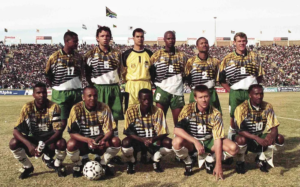
This is not a new pattern. I traced its origins back to 1963 in an earlier piece — The Chairmen: Politicians, Administrators and Businessmen — which documented how caretaker committees, government dissolutions, tribal politics, financial opacity, and FIFA interventions have been structural features of Kenyan football administration over six decades. The names change. The architecture does not. What is being proposed now — removing the president — is not a departure from that pattern. It is its latest iteration.
What This Crisis Actually Reveals
Let me be clear about what I am and am not saying. The EACC investigation is legitimate and necessary. If the allegations are substantiated, and if KES 42 million in public-adjacent funds were channelled through an unlicensed, newly incorporated broker for a tournament that may not have had valid insurance cover, that is a serious matter of public accountability that demands a thorough forensic response. The investigation should proceed without interference, and its findings should be acted upon.
But the investigation addresses what happened. The structural question is how it was possible.
A procurement process of this scale — tournament insurance for a continental competition hosted in Kenya’s name, involving public resources — should not depend on the personal integrity of the federation president to produce a legitimate outcome. There should be procurement frameworks that require competitive tendering. There should be internal compliance checks that flag unlicensed counterparties. There should be an independent audit function that reviews financial flows before they become the subject of public allegations. There should be a ministry oversight mechanism that does not learn about a KES 200 million insurance scandal from media reports.
None of these mechanisms appears to have existed or to have functioned. And their absence is not Hussein Mohamed’s creation. It is the inherited condition of a federation that has never been required to build institutional infrastructure, because every previous crisis has been resolved by removing a person rather than building a system.
The Cabinet Secretary’s initial public statement is, in its own way, the clearest evidence of this condition. “We’ve been following through your reports in the media,” he said, “and we are happy that FIFA has already written to get communication from the federation, and we are also looking forward to the decision of FIFA once they receive these documents, they will give the way forward.”
The Ministry of Sports of the Republic of Kenya, whose government has committed $30 million to host a continental tournament, is reading about its own federation in the press and waiting for a Swiss-registered organisation to tell it what to do. That is not a statement about one Cabinet Secretary. It is a statement about the institutional relationship between the Kenyan state and its football ecosystem. There is no framework defining what the ministry is responsible for, what it is entitled to demand, and what the limits of FIFA’s authority are in a domestic governance dispute. So, the default is deference, and the country’s football future is outsourced to a body whose primary interest is not Kenya’s development, but the uninterrupted delivery of its commercial tournament calendar.
The AFCON 2027 Dimension
There is a specific and urgent reason why this crisis matters beyond the federation’s internal affairs.
Kenya was stripped of the right to host the 1996 Africa Cup of Nations because the government failed to honour its commitment to build the required infrastructure. That stripping was a formative moment for a generation of Kenyan football supporters, and a direct consequence of the same misalignment between hosting ambition and institutional capacity that the current crisis illustrates.
Thirty years later, Kenya is preparing to co-host AFCON 2027 alongside Uganda and Tanzania. A CAF inspection report published in February 2026 confirmed that none of the proposed competition stadiums across all three host nations currently meet Category 4 requirements. Talanta Stadium remains under construction. Nyayo has been recommended for use only as a training venue. The common visa facilitation framework across the three nations, which is required by August 2026, shows no public evidence that it has been commenced.
Into this environment, the federation is now split into two factions. The High Court has halted the president’s removal. The Sports Disputes Tribunal has halted the NEC decision. FIFA and CAF are monitoring. Meanwhile, the federation’s delegation travelled to the FIFA Congress in Canada and has been active on social media, projecting the appearance of business as usual.
CHAN 2025, the tournament at the centre of the current allegations, was explicitly positioned as the dress rehearsal for AFCON 2027. If the dress rehearsal involved procurement irregularities of this scale, the question is not only whether the president should remain. The question is whether the institutional capacity to deliver basic hosting obligations exists at all, and what is being done urgently to build it.
The Structural Argument
African football communities — supporters, administrators, journalists, policymakers — tend to attribute governance problems to personalities. When a federation fails, we ask who failed it. When funds disappear, we ask who took them. When a bid collapses, we ask who was responsible.
These are not wrong questions. Accountability for individual conduct matters. But they are incomplete questions, and their incompleteness is itself a governance problem because it produces responses that satisfy the demand for action without addressing the conditions that made the action necessary.
Removing Hussein Mohamed does not create a procurement framework. It does not establish an independent audit function. It does not define the ministry’s oversight mandate. It does not produce a legacy plan for AFCON 2027. It does not build the stadium at Talanta or resolve the visa framework across three sovereign nations. It does not change the relationship between the Kenyan government and CAF from supplicant to strategic actor.
It removes a person and leaves everything else exactly as it was.
The federation that elects the next president will have the same structural vulnerabilities as the federation that elected this one. The same absence of institutional memory. The same opacity in procurement. The same dependency on FIFA’s periodic interventions to restore order. The same ministry that follows events in the media. The same hosting commitments are made without legacy frameworks. The same cycle will repeat until the next crisis, when the community will again ask: who is responsible, and how do we remove them?
This is the governance culture that African football must confront. Not in the abstract, but in the specific and operational terms of what institutions need to exist, what frameworks need to be built, and what accountability mechanisms need to function independently of who occupies the chair.
The Monopoly Nobody Questions
The Mariga letter to Safaricom, which threatened the Chapa Dimba grassroots tournament, reveals something that goes deeper than the FKF crisis. It exposes a structural feature of global football governance that African communities have largely accepted without question: the one-federation principle.
FIFA’s rules require each member association to be the single, exclusive body recognised for football in its territory. This is presented as a governance standard. In practice, it is a commercial control mechanism, one that ensures all value flows within the football ecosystem must pass through the affiliated federation, regardless of that federation’s performance. Sponsorship, development funds, and grassroots programme delivery: all of it is gated by the federation and, by extension, by FIFA and CAF above it.
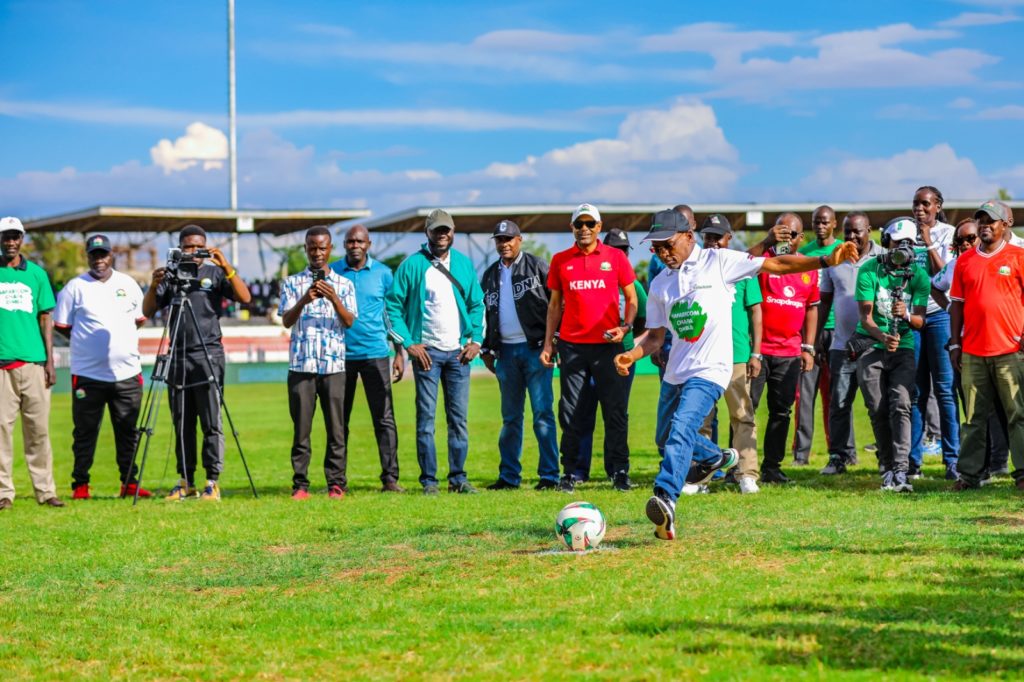
Safaricom has invested in Chapa Dimba, one of the most effective grassroots football programmes in East Africa, reaching hundreds of thousands of young players across the country. That investment could easily be entangled in a governance dispute that has nothing to do with the youths playing football and everything to do with who controls the institution through which the programme must flow. The children do not have a problem with factionalism. But they are collateral damage in one.
The question that should be asked, but rarely is, is why Safaricom has no alternative. Why can a corporate partner with a genuine commitment to grassroots football development not work with any credible, legally registered, accountable organisation to deliver football programmes? There is no Kenyan law that grants FKF exclusive rights to organise football activities or programmes. The exclusivity is a FIFA rule, not a national legal requirement. It exists to protect the governing body’s commercial control, not to protect communities.
A genuinely competitive delivery ecosystem in which any legally registered, accountable organisation can run football programmes, attract sponsorship, and access development funding would not eliminate the federation. Where federations perform well, they would remain the natural primary partner. But it would mean that governance failure at the top does not automatically starve the grassroots. It would mean that a sponsor committed to youth development has options. It would mean that the football community’s well-being is not held hostage to the factional disputes of the institution that governs it.
This is not a marginal reform. It requires challenging the one-federation principle at its root, that is, through national competition law, through advocacy for continental governance, or through the collective pressure of a football community that understands what the monopoly costs them. It is a harder conversation than removing a president. It is also a more consequential one.
A Call to the African Football Community
The Africa Football Business Summit will convene in the coming months. Kenya’s current crisis, the AFCON 2025 governance ruling, the CAF inspection report, and the Ministry’s abdication of oversight are not peripheral concerns for that agenda. They are its most urgent content.
The African football community — administrators, policymakers, investors, journalists, civil society — must make a collective decision to stop trying to solve structural problems through personality change. The tools exist: independent procurement frameworks, mandatory legacy plans, parliamentary oversight of hosting commitments, professional administration standards, transparent financial management, and ministry-federation relationship agreements with defined roles and limits. None of these requires a particular individual to be president. They require institutional will and a community that demands them rather than accepting their absence as normal.
Kenya has been here before. In 1996, it lost the right to host AFCON because the government failed to honour its commitment. In 2017, it failed to host CHAN for the same reasons. In 2025, it hosted CHAN under a cloud of procurement allegations that are now the subject of a national anti-corruption investigation. In 2027, it is scheduled to co-host AFCON, with stadiums that do not yet meet the required standards, and a fractured federation.
The question is not who leads FKF. The question is what kind of institution FKF is, and what kind of governance ecosystem Kenya is willing to build around it. Removing the person is the easy part. It is also, on its own, the least consequential part. The harder work is what comes after. And it has to begin now.